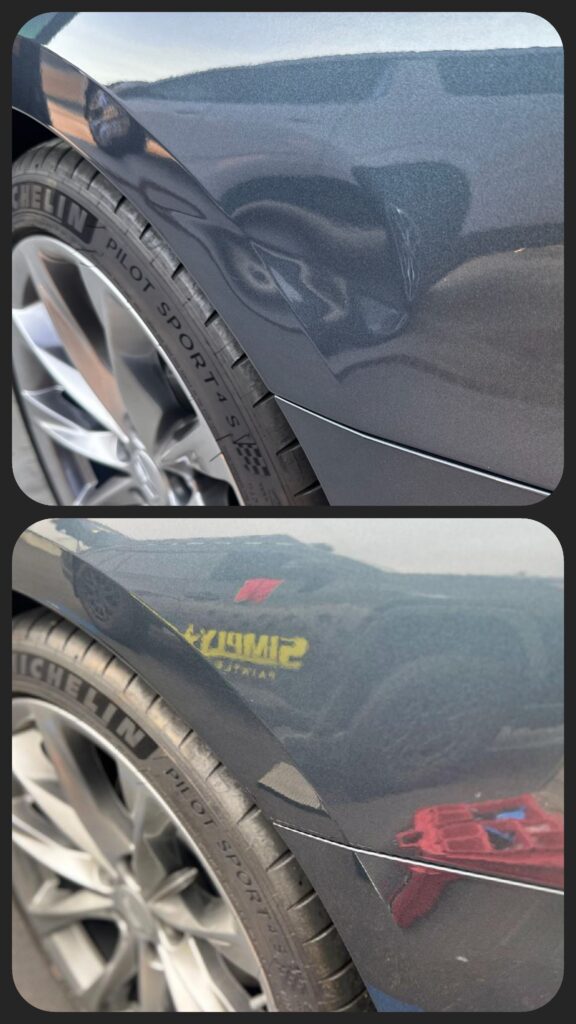
By Simply Dents | Fallbrook and Surrounding Communities | 951.378.6662

Discovering a dent on your vehicle can be frustrating, especially when your car otherwise looks great. Whether the damage came from a shopping cart, an unexpected door ding, a minor parking lot incident, or a small falling object, even a seemingly minor dent can affect your vehicle’s appearance. Fortunately, not every dent requires extensive bodywork, sanding, or repainting. Simply Dents offers mobile paintless dent removal in Fallbrook and surrounding communities, providing a convenient solution for eligible dents while helping preserve your vehicle’s original factory finish. If you’re looking for a practical way to improve your car’s appearance without visiting a traditional body shop, call 951.378.6662 to discuss your vehicle’s damage and available mobile paintless dent repair options.
🔧 What Is Paintless Dent Removal?
Paintless dent removal, also known as paintless dent repair or PDR, is a specialized automotive repair technique used to remove certain dents without conventional body filler or repainting.
Instead of sanding down the damaged area and applying new paint, a trained technician carefully manipulates the vehicle’s metal to restore its original contour as closely as possible.
This process is especially effective when the factory paint remains intact and the metal has not been excessively stretched or sharply creased.
How Paintless Dent Repair Works
A technician evaluates the dent’s size, location, depth, and accessibility before determining whether PDR is appropriate.
Depending on the damage, specialized tools may be used to apply controlled pressure from behind the panel.
In some situations, an exterior glue-pulling technique may be appropriate, provided the paint and panel conditions allow it.
Specialized lighting or reflection boards help reveal subtle changes in the panel’s surface.
The technician gradually works the damaged area toward its original shape.
Because the process does not typically require conventional refinishing, paintless dent repair can preserve the existing paint finish when performed on suitable damage.
However, not every dent can be completely removed using this method.
A professional evaluation is important before choosing a repair approach.
🚙 1. Mobile Dent Repair Brings Convenience to Your Location
One of the biggest advantages of mobile paintless dent removal is convenience.
Traditional automotive bodywork may require leaving your vehicle at a repair facility for an extended period.
With a mobile service, qualifying repairs may be performed at a suitable home, workplace, or other approved location.
Benefits of Mobile Dent Repair
Less Travel
You may not need to drive to a repair facility for every eligible dent.
Convenient Scheduling
Mobile service can make it easier to coordinate repairs around work and family commitments.
Reduced Disruption
For suitable damage, the repair process may involve less disruption than conventional bodywork.
On-Site Assessment
A technician can evaluate damage at a location where adequate access, lighting, and working conditions are available.
Flexible Service Locations
Mobile repairs may be convenient for customers throughout Fallbrook and nearby communities, depending on scheduling and service coverage.
The repair location must be appropriate for the work, and some dents may require shop-based equipment or conventional body repair.
For busy vehicle owners, mobile dent repair in Fallbrook offers an appealing alternative to unnecessary travel.
✨ 2. Preserve Your Vehicle’s Original Factory Paint
Your vehicle’s original paint finish is an important part of its appearance and overall condition.
Modern automotive paint systems are designed to provide color, gloss, and protection against environmental exposure.
Traditional dent repair may require sanding, body filler, primer, and repainting.
While these methods are necessary for certain types of damage, they may not be needed when the paint remains intact and the dent is suitable for PDR.
Why Factory Paint Preservation Matters
- Helps maintain the vehicle’s original finish.
- Avoids repainting for eligible dents.
- Reduces the need for color matching.
- Preserves existing factory-applied coatings.
- May help maintain vehicle appearance and resale appeal.
- Avoids unnecessary refinishing materials.
Paintless dent removal is particularly attractive for vehicle owners who want to maintain the original appearance of their cars, trucks, and SUVs.
It is important to understand that PDR does not repair missing paint, deep scratches, or damaged clear coat.
Those conditions may require additional refinishing services.
🛒 3. Door Ding Repair for Everyday Parking Lot Damage
Parking lots are among the most common places where vehicles experience minor dents.
A neighboring car door may accidentally strike your vehicle, leaving a small indentation in the panel.
Shopping carts, bicycles, and other objects can also cause localized damage.
Common Door Ding Locations
Front Doors
Dents may appear along broad panel surfaces or near body lines.
Rear Doors
Parking lot impacts frequently affect rear door panels.
Quarter Panels
Certain dents may be accessible for specialized repair, depending on the vehicle’s construction.
Fenders
Minor dents on metal fenders may be suitable for PDR.
Body Lines
Some dents along body lines can be repaired, although the difficulty depends on the shape and severity of the damage.
Professional door ding removal can improve the appearance of eligible dents without requiring an entire panel to be repainted.
The technician must evaluate panel access, metal deformation, and paint condition before determining whether the dent can be repaired successfully.
🌧️ 4. Paintless Dent Repair for Minor Hail Damage
Although Fallbrook is not typically associated with frequent major hailstorms, vehicles can experience hail damage while traveling or during unusual weather events.
Hail can leave multiple small dents across a vehicle’s hood, roof, trunk, and other exposed panels.
When the paint remains intact, paintless hail damage repair may be an effective option.
Benefits of PDR for Qualifying Hail Damage
Original Paint Preservation
Suitable dents may be removed without repainting.
Multiple Dent Treatment
A technician can assess numerous dents across affected panels.
Less Conventional Bodywork
Some hail damage can be corrected without sanding or filler.
Appearance Restoration
PDR may restore the original contours of eligible panels.
The feasibility of repair depends on dent depth, metal stretching, panel material, accessibility, and other factors.
Extensive hail damage may require a combination of repair methods.
If the damage involves an insurance claim, customers should confirm coverage and claim procedures with their insurer.
💰 5. Paintless Dent Repair May Cost Less Than Traditional Bodywork
Repair cost is an important consideration for most vehicle owners.
Traditional bodywork can involve multiple stages, including surface preparation, filler application, sanding, priming, painting, and finishing.
For suitable dents, paintless dent repair may eliminate several of those steps.
Factors That Affect Dent Repair Pricing
Dent Size
Larger dents may require more extensive work.
Dent Depth
Deep indentations can be more difficult to correct.
Damage Location
Dents near edges, structural areas, or complex body lines may require additional labor.
Panel Accessibility
Limited access behind the damaged area can increase repair difficulty.
Number of Dents
Multiple dents may affect total repair time and pricing.
Paint Condition
Cracked or damaged paint can limit PDR suitability.
Vehicle Construction
Panel material and design influence repair techniques.
Because each dent is different, an accurate estimate generally requires photographs or an in-person evaluation.
Affordable paintless dent removal should focus on appropriate repair methods and workmanship rather than simply choosing the lowest price.
⏱️ 6. Many Minor Dents Can Be Repaired Efficiently
One reason vehicle owners consider PDR is that suitable dents may require less time than conventional bodywork.
Traditional repairs often involve preparation, refinishing, and curing processes.
PDR focuses on reshaping the affected panel without those refinishing steps.
What Influences Repair Time?
- Dent size and severity.
- Number of damaged areas.
- Panel accessibility.
- Location near body lines.
- Vehicle construction.
- Existing paint condition.
- Required preparation and disassembly.
A small, accessible door ding may be less complicated than a large dent involving stretched metal or difficult panel access.
However, repair times vary, and no single timeframe applies to every vehicle.
For busy drivers, mobile paintless dent repair services can provide a convenient way to address cosmetic damage without automatically committing to extensive bodywork.
🚘 7. Improve Your Vehicle’s Appearance and Resale Appeal
Small dents may seem insignificant, but they can make an otherwise well-maintained vehicle look neglected.
When selling or trading in a car, buyers often consider its overall exterior condition.
Visible dents may affect a potential buyer’s perception of how well the vehicle has been maintained.
Why Exterior Appearance Matters
First Impressions
A smooth, well-maintained exterior can make a vehicle more appealing.
Trade-In Evaluations
Dealerships may consider visible cosmetic damage when assessing vehicle condition.
Private-Party Sales
Buyers often inspect body panels for dents, scratches, and other signs of damage.
Lease Returns
Some lease agreements include standards for acceptable exterior wear.
Personal Satisfaction
Many drivers simply enjoy keeping their vehicles looking their best.
Professional minor dent removal may help improve a vehicle’s presentation before resale, trade-in, or lease return.
Actual resale value depends on numerous factors, including age, mileage, condition, market demand, and repair history.
PDR does not guarantee a specific increase in vehicle value.
🛠️ 8. What Types of Dents Can Be Removed Without Painting?
Not every dent requires repainting, but not every dent qualifies for PDR.
The best candidates generally have intact paint and metal deformation that can be corrected without conventional refinishing.
Common PDR Candidates
Small Door Dings
Localized dents caused by neighboring doors or similar impacts.
Minor Parking Lot Dents
Certain dents caused by carts or low-speed contact.
Shallow Panel Dents
Broad, relatively smooth indentations may be suitable depending on metal stretching.
Minor Hail Dents
Multiple small dents with intact paint can sometimes be corrected.
Certain Body-Line Dents
Some dents affecting panel contours may be repairable with specialized techniques.
Damage That May Not Be Suitable
- Cracked or missing paint.
- Severe metal stretching.
- Deep, sharp creases.
- Structural damage.
- Certain inaccessible locations.
- Extensive collision damage.
- Damaged plastic panels requiring different repair methods.
Aluminum panels can sometimes be repaired using PDR, but they may require different techniques and can be more challenging than some steel panels.
A professional paintless dent repair assessment helps determine the best approach for each situation.
🔍 9. Why Professional Dent Removal Is Better Than DIY Methods
Online videos often suggest using suction cups, hot water, household tools, or other improvised techniques to remove dents.
Although these methods may appear simple, automotive body panels are more complex than they look.
Applying uncontrolled force can create additional damage.
Risks of DIY Dent Removal
Paint Damage
Improper pulling or heating can damage automotive finishes.
High Spots
Excessive pressure may create raised areas in the metal.
Additional Creases
Incorrect manipulation can make the dent more difficult to repair.
Panel Distortion
Uncontrolled force may affect surrounding surfaces.
Damage to Interior Components
Attempting to access the back of a panel can damage trim, wiring, or other parts.
Increased Repair Costs
A poorly attempted repair may make professional correction more complicated.
Professional paintless dent removal technicians use specialized tools, lighting, and controlled techniques to evaluate and reshape eligible damage.
When the goal is preserving your vehicle’s appearance, professional assessment is generally preferable to experimenting with improvised methods.
🏡 10. Mobile Paintless Dent Removal for Fallbrook and Surrounding Communities
Fallbrook is known for its residential neighborhoods, scenic roads, agricultural surroundings, and convenient access to neighboring North County communities.
Residents rely on cars, trucks, and SUVs for commuting, shopping, family activities, and everyday transportation.
Minor dents can occur anywhere vehicles are parked or used.
Fallbrook
Vehicle owners may need assistance with parking lot dents, door dings, and other minor cosmetic damage.
Bonsall
Drivers throughout the area can benefit from convenient dent assessment and repair options.
Rainbow
Residents with busy schedules may appreciate mobile service availability for qualifying repairs.
De Luz
Vehicle owners in rural and residential areas may find mobile repair especially convenient when service coverage permits.
Oceanside
Drivers looking to maintain their vehicle’s exterior appearance may consider PDR for eligible dents.
Vista
Everyday parking and commuting can result in small dents that may be suitable for paintless repair.
Temecula
Vehicle owners may seek convenient solutions for minor dents and door dings.
Murrieta
Drivers interested in maintaining their cars, trucks, and SUVs can explore PDR as an alternative to conventional bodywork for suitable damage.
Mobile paintless dent removal near Fallbrook provides a convenient option for customers in the region, subject to confirmed service availability and repair conditions.
📸 How to Prepare for a Mobile Dent Repair Estimate
Providing clear information about your vehicle’s damage can help make the evaluation process more efficient.
Before requesting a mobile dent repair estimate, gather the following details.
Vehicle Make and Model
Different vehicles use different panel designs and materials.
Year of the Vehicle
The model year can help identify body construction and relevant repair considerations.
Dent Location
Specify whether the damage is on a door, hood, fender, roof, quarter panel, or another area.
Approximate Dent Size
Compare the dent with a familiar object or provide measurements when possible.
Paint Condition
Mention any visible scratches, cracks, chips, or previous repairs.
Clear Photographs
Take photos from several angles, including images that show reflected light across the damaged surface.
Service Location
Provide the general community where the vehicle will be available for evaluation or repair.
Photographs can help with preliminary assessment, but some damage may require in-person inspection before a final repair recommendation or price can be confirmed.
🧼 How to Protect Your Vehicle From Future Door Dings
Although minor dents cannot always be prevented, a few practical habits can help reduce exposure to everyday damage.
Smart Parking Habits
Choose Parking Spaces Carefully
Whenever practical, park away from crowded areas and shopping cart collection points.
Allow Space Between Vehicles
Extra clearance may reduce accidental door contact.
Avoid Tight Parking Spaces
Narrow spaces increase the chance of neighboring doors contacting your vehicle.
Be Mindful of Wind
Strong wind can cause doors to swing open unexpectedly.
Secure Items Around Your Vehicle
Bicycles, tools, and household equipment can cause dents if they fall or strike body panels.
Inspect Your Vehicle Periodically
Identifying new damage early makes it easier to document the condition and explore repair options.
While no parking strategy eliminates every risk, careful habits can help protect your vehicle’s appearance.
⚖️ Paintless Dent Repair vs. Traditional Auto Body Repair
Understanding the difference between PDR and conventional body repair can help you choose the most appropriate solution.
| Feature | Paintless Dent Repair | Traditional Body Repair |
|---|---|---|
| Primary method | Controlled metal reshaping | May involve filler, sanding, and refinishing |
| Repainting | Usually not required | Often required |
| Factory paint | Typically preserved when intact | May require refinishing |
| Best applications | Eligible dents with intact paint | Paint damage, severe deformation, and other complex repairs |
| Repair time | Varies; often fewer refinishing steps | Varies with repair and curing requirements |
| Cost | May be lower for suitable dents | Depends on damage and required work |
| Mobile suitability | Possible for many eligible dents | Often requires shop facilities |
Neither method is universally better.
Paintless dent repair is an excellent option when the damage meets the necessary conditions.
Traditional bodywork remains essential for dents involving cracked paint, extensive stretching, or other damage that cannot be corrected through PDR.
🚙 Is Paintless Dent Repair Right for Your Car, Truck, or SUV?
PDR can be used on many vehicle types, but suitability depends on the damaged panel rather than the vehicle category alone.
Sedans, SUVs, pickup trucks, and other vehicles may have eligible dents.
Important considerations include panel material, access, paint condition, and dent severity.
A shallow dent on a metal door may be a good candidate, while a sharp crease near a reinforced edge may be more difficult.
Previous body repairs can also affect whether certain PDR techniques are appropriate.
For example, glue-pulling methods may not be suitable for some previously repainted surfaces because of the risk of paint damage.
Professional evaluation is the best way to determine whether paintless dent removal for cars, trucks, and SUVs is appropriate.
✨ Restore Your Vehicle’s Appearance Without Unnecessary Bodywork
Minor dents don’t always require major repairs.
For eligible damage, mobile paintless dent removal offers a convenient way to improve your vehicle’s appearance while preserving the existing paint finish.
Whether the problem is a parking lot door ding, a shallow body-panel dent, or certain types of hail damage, PDR may provide an efficient alternative to conventional refinishing.
The key is choosing the correct repair method based on the dent’s condition, location, and severity.
A professional assessment can help determine whether the damage is suitable for paintless repair and what results may be achievable.
For drivers throughout Fallbrook and nearby communities, mobile service can make maintaining a vehicle’s appearance more convenient.
📞 Schedule Mobile Paintless Dent Removal in Fallbrook Today
Don’t let an unsightly dent take away from your vehicle’s appearance when a convenient repair option may be available. Simply Dents provides mobile paintless dent removal in Fallbrook and surrounding communities, helping vehicle owners address eligible door dings, minor body-panel dents, and other cosmetic damage without unnecessary traditional bodywork. Whether you’re at home, at work, or preparing your vehicle for sale, professional paintless dent repair may help restore its appearance while preserving the original finish. Call 951.378.6662 today to discuss your vehicle’s damage, request an evaluation, and explore available mobile dent removal options.