Blog

  • 🚗 7 Reasons Paintless Dent Repair Is the Smart Choice for Door Dings and Minor Dents

    By Simply Dents | Fallbrook and Surrounding Communities | 951.378.6662
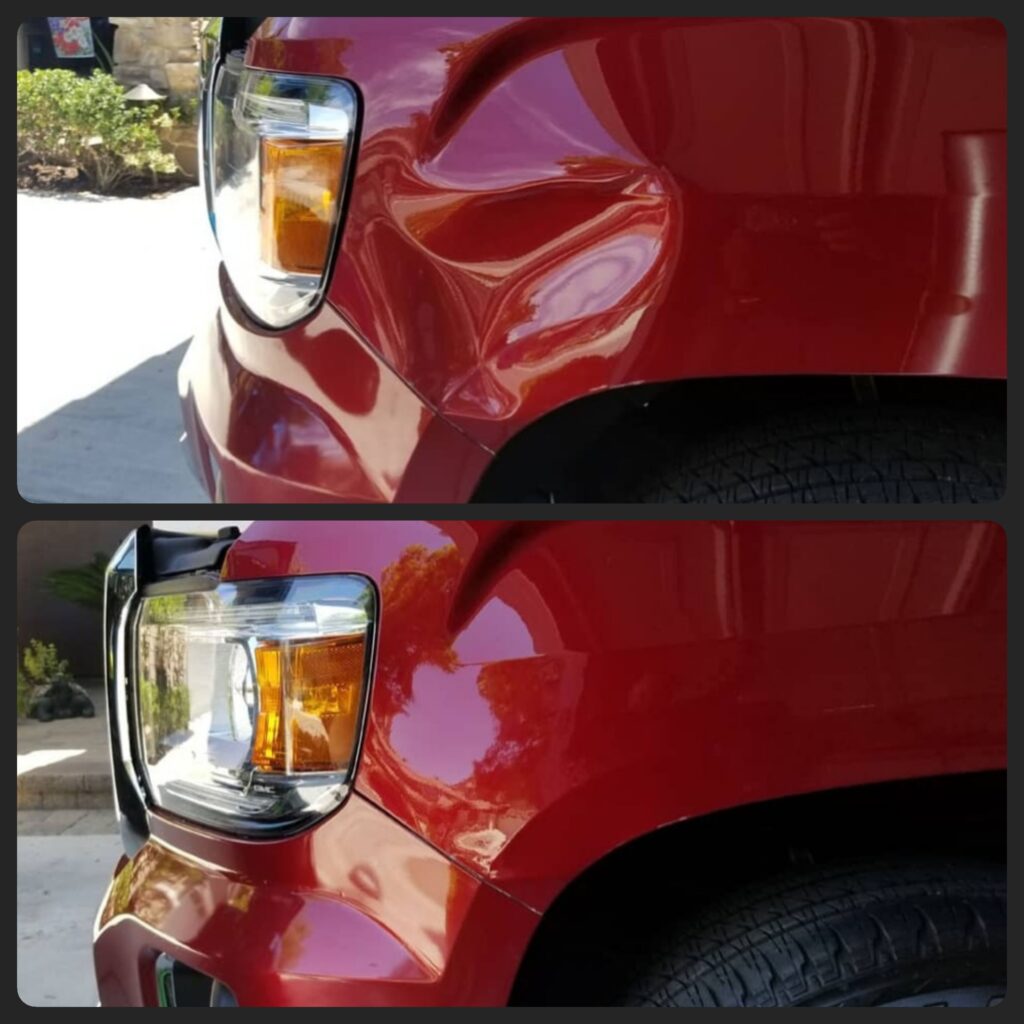
    7 Reasons Paintless Dent Repair Is the Smart Choice for Door Dings and Minor Dents

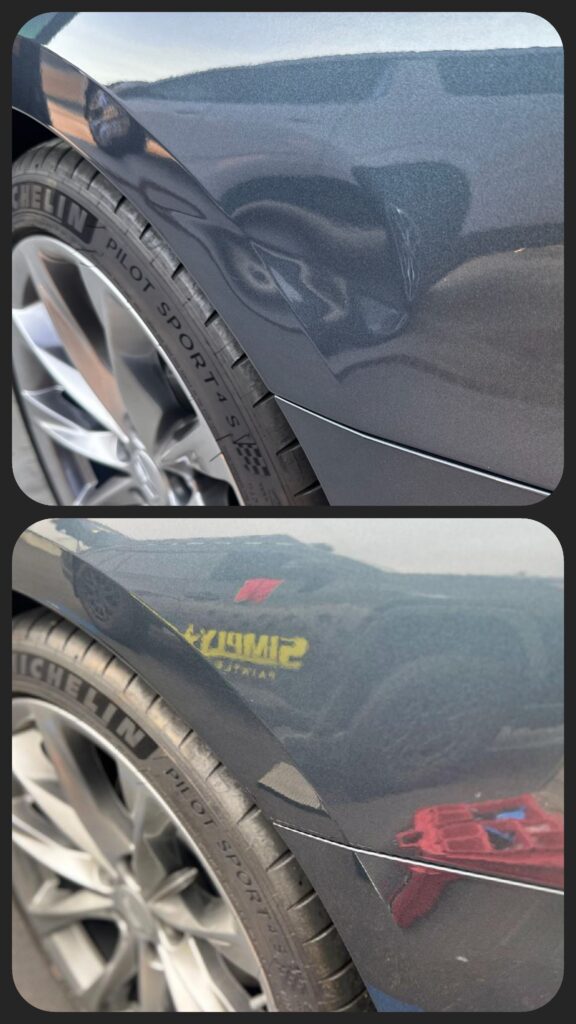
    A small dent can make a big difference in how your vehicle looks. Whether another driver accidentally opens a door into your car, a shopping cart bumps into a body panel, or a minor impact leaves an unwanted indentation, cosmetic damage can be frustrating. Fortunately, many dents can be corrected without the extensive sanding, filling, and repainting associated with traditional auto body repair. Simply Dents offers mobile paintless dent removal in Fallbrook and surrounding communities, helping vehicle owners restore the appearance of eligible dents while preserving their original paint finish. If your car, truck, or SUV has an unsightly door ding or minor dent, call 951.378.6662 to discuss paintless dent repair options and determine whether your damage may qualify for this convenient service.

    🔧 Understanding Paintless Dent Repair

    Paintless dent repair, commonly called PDR, is a specialized automotive repair process designed to reshape certain damaged metal body panels without conventional refinishing.

    Instead of sanding the damaged area, applying body filler, and repainting the panel, a trained technician uses specialized tools and techniques to gradually restore the metal’s contour.

    The process is most effective when the vehicle’s paint remains intact and the metal has not been excessively stretched.

    How Does Paintless Dent Removal Work?

    The repair process generally begins with an assessment of the dent.

    A technician examines the damage to determine its size, depth, location, paint condition, and accessibility.

    Specialized lighting or reflection boards may be used to identify subtle surface distortions.

    When access permits, tools can be positioned behind the damaged panel to apply carefully controlled pressure.

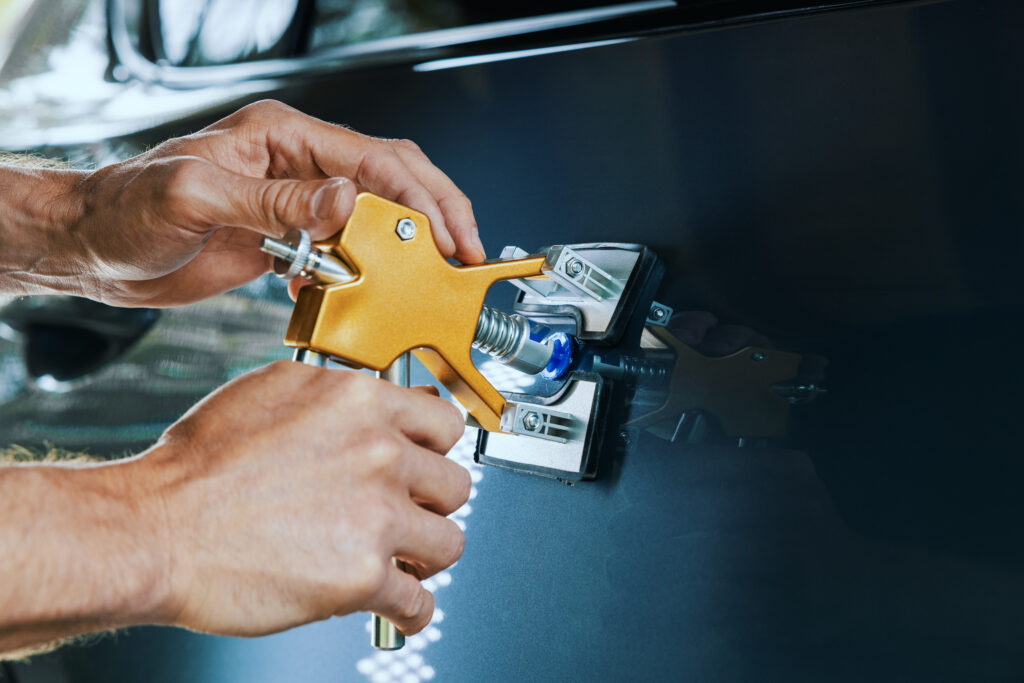
    In certain circumstances, exterior glue-pulling techniques may be appropriate.

    The technician gradually manipulates the metal toward its original shape while monitoring the panel’s surface.

    Because every dent is different, results depend on the damage and the vehicle’s construction.

    For qualifying dents, professional paintless dent removal can offer several important advantages.

    ✨ 1. Preserve Your Vehicle’s Original Factory Paint

    One of the most significant benefits of paintless dent repair is the ability to preserve the vehicle’s existing paint finish.

    Modern automotive paint systems include multiple layers that provide color, gloss, and protection.

    When a dent has not cracked or otherwise damaged the paint, repainting may be unnecessary.

    Why Factory Paint Matters

    Original Appearance

    Preserving the factory finish helps maintain a consistent appearance across the vehicle.

    No Color Matching

    Conventional refinishing requires careful paint color matching, which can be challenging on certain finishes.

    No Unnecessary Repainting

    PDR eliminates the need for repainting when the damage is suitable.

    Existing Finish Preservation

    The original paint and clear coat can remain in place.

    Potential Resale Appeal

    Buyers may appreciate a vehicle that retains its original finish and presents well cosmetically.

    However, PDR cannot restore missing paint or repair deep scratches.

    If the paint is cracked, chipped, or damaged, additional refinishing may be required.

    For many vehicle owners, factory paint preservation is a compelling reason to consider PDR.

    💰 2. Paintless Dent Repair Can Be More Cost-Effective

    Traditional body repair may involve several labor-intensive steps.

    Depending on the damage, these can include sanding, filling, priming, painting, and finishing.

    For eligible dents, PDR may avoid much of that work.

    Why PDR May Cost Less

    Fewer Repair Materials

    Qualifying repairs typically do not require body filler, primer, or new paint.

    Reduced Refinishing Labor

    The process focuses on reshaping the metal rather than rebuilding and refinishing the surface.

    No Paint-Curing Stage

    Because conventional repainting is generally unnecessary, paint curing is not part of the usual PDR process.

    Targeted Repair

    The technician concentrates on the damaged area rather than automatically refinishing an entire panel.

    What Determines Dent Repair Pricing?

    Several factors influence the final cost:

    • Size of the dent.
    • Depth of the indentation.
    • Location on the vehicle.
    • Number of dents.
    • Panel accessibility.
    • Metal deformation.
    • Vehicle construction.
    • Previous paint or body repairs.

    A small dent on an accessible door panel may be simpler to repair than a sharp crease near a reinforced body line.

    Affordable paintless dent removal depends on the specific damage, and an accurate estimate should be based on a proper evaluation.

    PDR is not guaranteed to cost less in every situation, but it can be an economical choice for suitable dents.

    ⏱️ 3. Many Minor Dents Can Be Repaired More Efficiently

    Time is valuable, especially when you depend on your vehicle for commuting, work, family transportation, or everyday errands.

    Traditional bodywork can require multiple repair stages and time for refinishing materials to cure.

    For eligible dents, paintless dent removal avoids many of those steps.

    Factors That Influence Repair Time

    Dent Size

    Smaller dents are often less complicated than larger indentations.

    Dent Depth

    Deep dents may require more detailed metal manipulation.

    Panel Access

    Some body panels provide easier access than others.

    Body Lines

    Damage involving sharp contours can require additional precision.

    Number of Dents

    Multiple dents generally require more work than a single door ding.

    Vehicle Material

    Steel and aluminum panels can respond differently during repair.

    Actual repair times vary considerably.

    Some small, accessible dents may be addressed relatively quickly, while more complex damage can require substantially more time.

    For busy Fallbrook drivers, mobile paintless dent repair may help reduce the disruption associated with minor cosmetic damage.

    🚙 4. Mobile Dent Repair Offers Added Convenience

    One of the biggest advantages of choosing a mobile service is the possibility of having eligible repairs performed at a convenient location.

    Rather than automatically traveling to a conventional body shop, customers may be able to arrange service at their home, workplace, or another suitable location.

    Benefits of Mobile Service

    Convenient Appointments

    Mobile scheduling may be easier to coordinate with work and family responsibilities.

    Reduced Travel

    Customers may avoid an unnecessary trip to a repair facility.

    Less Vehicle Disruption

    Suitable repairs may be completed without leaving the vehicle at a body shop for an extended period.

    Flexible Locations

    Mobile service can be useful for customers throughout Fallbrook and nearby communities when coverage and working conditions permit.

    Personalized Damage Assessment

    The technician can examine the affected panel and discuss realistic repair expectations.

    What Makes a Location Suitable?

    Mobile PDR requires adequate space, appropriate lighting, safe working conditions, and access to the damaged area.

    Some repairs may be affected by weather, parking restrictions, or other site conditions.

    Customers should confirm service availability and location requirements when arranging an appointment.

    For many drivers, mobile dent repair in Fallbrook provides a convenient alternative to conventional repair scheduling.

    🛒 5. Paintless Dent Repair Is Ideal for Many Door Dings

    Door dings are among the most common types of minor vehicle damage.

    They often occur in parking lots, shopping centers, apartment complexes, office parking areas, and other locations where vehicles are parked close together.

    A neighboring car door can strike a body panel and leave a noticeable indentation.

    Shopping carts and other objects can create similar damage.

    Common Locations for Door Dings

    Front Doors

    Broad metal surfaces may be good candidates for PDR when the paint remains intact.

    Rear Doors

    Minor parking lot impacts frequently affect rear doors.

    Front Fenders

    Certain fender dents can be repaired using paintless techniques.

    Quarter Panels

    Some quarter-panel dents may qualify, depending on accessibility and panel construction.

    Body Lines

    Dents along body lines can sometimes be corrected, although they may be more challenging.

    Why Door Dings Should Be Evaluated Early

    A door ding may not affect the vehicle’s mechanical performance, but it can detract from its appearance.

    Correcting suitable damage can help maintain a clean exterior.

    Professional door ding removal in Fallbrook can often address these imperfections without repainting the affected panel.

    However, dents involving cracked paint, sharp creases, or severe stretching may require a different repair approach.

    🚘 6. Improve Your Vehicle’s Appearance Before Selling or Trading It In

    Your vehicle’s exterior condition can influence how potential buyers perceive its overall care.

    A car with several visible dents may appear less well maintained than a similar vehicle with smooth body panels.

    Although minor dents do not necessarily affect mechanical performance, they can influence presentation.

    Situations Where Dent Removal May Help

    Private Vehicle Sales

    A clean exterior can make a stronger first impression on prospective buyers.

    Dealership Trade-Ins

    Dealerships may consider cosmetic damage during vehicle appraisals.

    Lease Returns

    Certain lease agreements include standards for acceptable exterior wear.

    Preparing a Vehicle for Photography

    Removing visible dents may improve the appearance of vehicle listing photographs.

    Personal Vehicle Care

    Many owners simply want their cars to look as good as possible.

    Does Paintless Dent Repair Increase Resale Value?

    PDR may improve cosmetic presentation and help reduce the negative impression caused by visible dents.

    However, it does not guarantee a specific increase in resale value.

    Vehicle value depends on age, mileage, mechanical condition, market demand, accident history, and numerous other factors.

    For drivers preparing to sell, paintless dent removal before selling a car may be worth considering when the repair cost is reasonable relative to the expected benefit.

    🌱 7. Paintless Dent Repair Can Reduce Refinishing Materials

    Another advantage of PDR is that it typically avoids the materials required for conventional refinishing.

    Traditional body repair may involve paint, primer, body filler, solvents, masking materials, and other products.

    For eligible dents, PDR relies primarily on specialized tools and metal manipulation.

    Potential Environmental Benefits

    Less Paint Use

    Qualifying repairs do not require new automotive paint.

    Reduced Solvent Use

    Conventional refinishing products may be unnecessary.

    Less Body Filler

    PDR generally avoids filler application.

    Fewer Refinishing Consumables

    Certain sanding, masking, and painting materials may not be needed.

    Preservation of Existing Materials

    The original painted panel remains in service.

    These differences can reduce the materials associated with repairing a suitable dent.

    However, the total environmental impact depends on the specific repair process, travel requirements, equipment, and other factors.

    Paintless dent repair can be a material-efficient alternative when conventional refinishing is unnecessary.

    🔍 What Types of Dents Are Good Candidates for PDR?

    Although PDR offers several benefits, not every dent can be repaired using this method.

    A professional evaluation helps determine whether the damaged panel can be reshaped safely and effectively.

    Common PDR Candidates

    Small Door Dings

    Localized dents caused by neighboring vehicle doors.

    Minor Parking Lot Dents

    Certain impacts from shopping carts or similar objects.

    Shallow Body-Panel Dents

    Smooth indentations that have not excessively stretched the metal.

    Minor Hail Damage

    Some hail-related dents with intact paint.

    Certain Creases

    Some less severe creases may be repairable, depending on their shape and location.

    Damage That May Require Traditional Bodywork

    • Cracked or missing paint.
    • Deep, sharp creases.
    • Extensive metal stretching.
    • Significant collision damage.
    • Structural damage.
    • Certain inaccessible dents.
    • Damaged plastic components requiring another repair method.

    The best repair method depends on the actual condition of the vehicle.

    🛠️ Why DIY Dent Removal Can Cause More Problems

    Many vehicle owners search online for inexpensive dent removal techniques.

    Popular suggestions include suction cups, household plungers, hot water, glue-pulling kits, and improvised tools.

    While these methods may appear simple, automotive body panels require careful handling.

    Potential Problems With DIY Repairs

    Paint Damage

    Improper pulling can damage paint or clear coat.

    Raised Metal Areas

    Applying too much force may create high spots.

    Additional Creases

    Incorrect manipulation can make the original dent more complicated.

    Panel Distortion

    Uncontrolled pressure may affect surrounding metal.

    Interior Damage

    Attempting to access a dent from behind the panel can damage trim, wiring, or other components.

    More Difficult Professional Repairs

    A poorly attempted repair may increase the complexity of later correction.

    Professional paintless dent repair technicians use specialized tools, controlled pressure, and reflection techniques to evaluate panel shape.

    For vehicle owners concerned about maintaining their original finish, professional assessment is generally the safer approach.

    📍 Mobile Paintless Dent Removal in Fallbrook and Nearby Communities

    Fallbrook and surrounding North County communities include residential neighborhoods, commercial centers, agricultural properties, and busy commuting routes.

    Drivers throughout the region may experience minor dents from everyday parking and vehicle use.

    Fallbrook

    Vehicle owners may need help with door dings, shallow panel dents, and other minor cosmetic damage.

    Bonsall

    Residents can explore mobile dent repair options for qualifying damage.

    Rainbow

    Drivers may appreciate the convenience of mobile service when coverage and scheduling permit.

    De Luz

    Mobile appointments may reduce travel for customers in rural areas when suitable service locations are available.

    Vista

    Vehicle owners seeking to maintain exterior appearance may consider PDR for eligible dents.

    Oceanside

    Parking lot damage and everyday vehicle use can create a need for minor dent removal.

    Temecula

    Car, truck, and SUV owners may benefit from convenient paintless dent repair options.

    Murrieta

    Drivers interested in maintaining vehicle appearance can explore PDR as an alternative to conventional bodywork.

    Mobile paintless dent removal near Fallbrook can help customers explore repair options without automatically arranging a traditional body shop visit.

    Actual service coverage should be confirmed when scheduling.

    📸 How to Get an Accurate Paintless Dent Repair Estimate

    Because every dent is different, pricing and repair feasibility depend on the details of the damage.

    Providing clear information can help with the initial evaluation.

    Information to Gather

    Vehicle Year, Make, and Model

    Different vehicles use different panel materials and construction methods.

    Dent Location

    Identify the affected door, fender, hood, roof, or other body panel.

    Approximate Dent Size

    Provide measurements or a familiar size comparison.

    Dent Depth

    Mention whether the indentation appears shallow or sharply defined.

    Paint Condition

    Describe visible scratches, chips, or cracks.

    Previous Bodywork

    Let the technician know whether the panel has been repainted or repaired previously.

    Photographs

    Take clear photos from several angles, preferably showing reflections across the damaged surface.

    Service Location

    Provide the community where the vehicle will be available.

    A preliminary assessment may be possible from photographs, but some dents require in-person inspection before a final recommendation can be made.

    🚗 How to Prevent Door Dings and Minor Dents

    While it’s impossible to eliminate every risk, careful parking and vehicle habits may reduce the likelihood of minor cosmetic damage.

    Practical Prevention Tips

    Choose Parking Spaces With More Clearance

    Whenever practical, avoid tightly packed parking areas.

    Stay Away From Shopping Cart Collection Areas

    Unsecured carts can cause vehicle damage.

    Be Careful Around Narrow Parking Spaces

    Limited clearance increases the likelihood of accidental door contact.

    Watch for Strong Winds

    Wind can cause doors to open suddenly.

    Secure Items in Garages and Driveways

    Bicycles, tools, and other objects can damage nearby vehicles.

    Inspect Your Vehicle Regularly

    Early detection can make it easier to document and evaluate damage.

    These simple habits can help preserve your vehicle’s appearance.

    ⚖️ Paintless Dent Repair vs. Traditional Body Repair

    Understanding the differences between these methods can help you decide which approach may be appropriate.

    FeaturePaintless Dent RepairTraditional Body Repair
    Repair methodControlled metal reshapingMay involve filler, sanding, and refinishing
    RepaintingUsually unnecessaryOften required
    Factory paintTypically preservedMay be refinished
    Ideal damageEligible dents with intact paintMore extensive damage or damaged paint
    Repair timeVaries; may avoid refinishing stagesDepends on repair and paint-curing requirements
    CostMay be lower for suitable dentsDepends on labor and materials
    Mobile availabilityPossible for many eligible repairsOften requires a repair facility

    Neither method is appropriate for every situation.

    A professional assessment can help determine whether PDR can produce an acceptable result.

    ✨ Why Professional Assessment Matters

    A dent’s appearance does not always reveal its full complexity.

    Two dents that look similar from the outside may require very different repair approaches.

    Factors such as metal stretching, panel thickness, access restrictions, and previous repairs can affect the outcome.

    A professional evaluation helps establish realistic expectations.

    Some dents can be restored extremely well, while others may retain minor imperfections or require conventional bodywork.

    Understanding the likely result before beginning work helps vehicle owners make informed decisions.

    For eligible damage, mobile paintless dent removal combines cosmetic improvement with the convenience of service at an appropriate location.

    📞 Restore Your Vehicle’s Appearance With Mobile Dent Repair in Fallbrook

    Don’t let a door ding or minor dent continue to detract from your vehicle’s appearance when a convenient repair solution may be available. Simply Dents offers mobile paintless dent removal in Fallbrook and surrounding communities, helping car, truck, and SUV owners address eligible cosmetic damage while preserving their original factory paint. Whether you’re preparing your vehicle for sale, correcting parking lot damage, or simply keeping your car looking its best, professional paintless dent repair may be the right solution. Call 951.378.6662 today to discuss your dent, request an evaluation, and explore available mobile repair options.

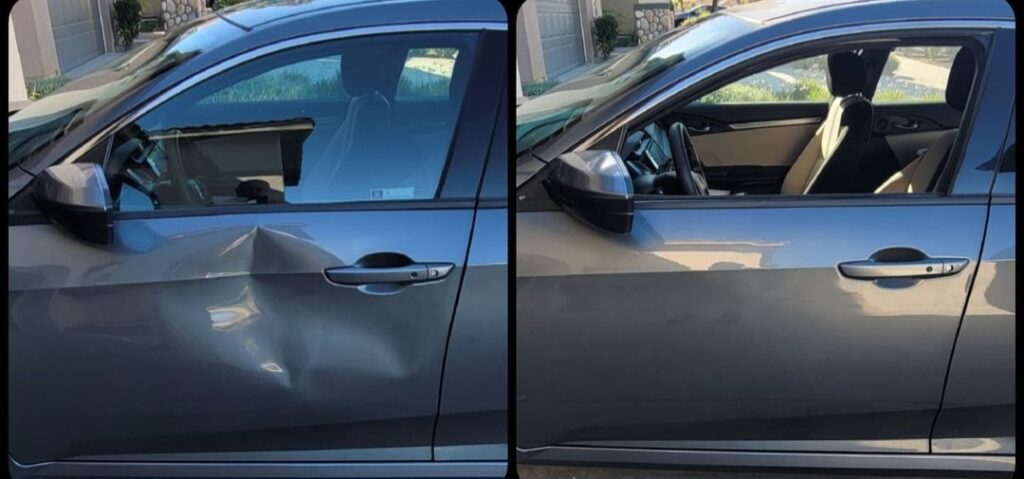
  • 🚗 Mobile Paintless Dent Removal in Fallbrook: Restore Your Vehicle Without Traditional Bodywork

    By Simply Dents | Fallbrook and Surrounding Communities | 951.378.6662

    Mobile Paintless Dent Removal in Fallbrook: Restore Your Vehicle Without Traditional Bodywork

    Discovering a dent on your vehicle can be frustrating, especially when your car otherwise looks great. Whether the damage came from a shopping cart, an unexpected door ding, a minor parking lot incident, or a small falling object, even a seemingly minor dent can affect your vehicle’s appearance. Fortunately, not every dent requires extensive bodywork, sanding, or repainting. Simply Dents offers mobile paintless dent removal in Fallbrook and surrounding communities, providing a convenient solution for eligible dents while helping preserve your vehicle’s original factory finish. If you’re looking for a practical way to improve your car’s appearance without visiting a traditional body shop, call 951.378.6662 to discuss your vehicle’s damage and available mobile paintless dent repair options.

    🔧 What Is Paintless Dent Removal?

    Paintless dent removal, also known as paintless dent repair or PDR, is a specialized automotive repair technique used to remove certain dents without conventional body filler or repainting.

    Instead of sanding down the damaged area and applying new paint, a trained technician carefully manipulates the vehicle’s metal to restore its original contour as closely as possible.

    This process is especially effective when the factory paint remains intact and the metal has not been excessively stretched or sharply creased.

    How Paintless Dent Repair Works

    A technician evaluates the dent’s size, location, depth, and accessibility before determining whether PDR is appropriate.

    Depending on the damage, specialized tools may be used to apply controlled pressure from behind the panel.

    In some situations, an exterior glue-pulling technique may be appropriate, provided the paint and panel conditions allow it.

    Specialized lighting or reflection boards help reveal subtle changes in the panel’s surface.

    The technician gradually works the damaged area toward its original shape.

    Because the process does not typically require conventional refinishing, paintless dent repair can preserve the existing paint finish when performed on suitable damage.

    However, not every dent can be completely removed using this method.

    A professional evaluation is important before choosing a repair approach.

    🚙 1. Mobile Dent Repair Brings Convenience to Your Location

    One of the biggest advantages of mobile paintless dent removal is convenience.

    Traditional automotive bodywork may require leaving your vehicle at a repair facility for an extended period.

    With a mobile service, qualifying repairs may be performed at a suitable home, workplace, or other approved location.

    Benefits of Mobile Dent Repair

    Less Travel

    You may not need to drive to a repair facility for every eligible dent.

    Convenient Scheduling

    Mobile service can make it easier to coordinate repairs around work and family commitments.

    Reduced Disruption

    For suitable damage, the repair process may involve less disruption than conventional bodywork.

    On-Site Assessment

    A technician can evaluate damage at a location where adequate access, lighting, and working conditions are available.

    Flexible Service Locations

    Mobile repairs may be convenient for customers throughout Fallbrook and nearby communities, depending on scheduling and service coverage.

    The repair location must be appropriate for the work, and some dents may require shop-based equipment or conventional body repair.

    For busy vehicle owners, mobile dent repair in Fallbrook offers an appealing alternative to unnecessary travel.

    ✨ 2. Preserve Your Vehicle’s Original Factory Paint

    Your vehicle’s original paint finish is an important part of its appearance and overall condition.

    Modern automotive paint systems are designed to provide color, gloss, and protection against environmental exposure.

    Traditional dent repair may require sanding, body filler, primer, and repainting.

    While these methods are necessary for certain types of damage, they may not be needed when the paint remains intact and the dent is suitable for PDR.

    Why Factory Paint Preservation Matters

    • Helps maintain the vehicle’s original finish.
    • Avoids repainting for eligible dents.
    • Reduces the need for color matching.
    • Preserves existing factory-applied coatings.
    • May help maintain vehicle appearance and resale appeal.
    • Avoids unnecessary refinishing materials.

    Paintless dent removal is particularly attractive for vehicle owners who want to maintain the original appearance of their cars, trucks, and SUVs.

    It is important to understand that PDR does not repair missing paint, deep scratches, or damaged clear coat.

    Those conditions may require additional refinishing services.

    🛒 3. Door Ding Repair for Everyday Parking Lot Damage

    Parking lots are among the most common places where vehicles experience minor dents.

    A neighboring car door may accidentally strike your vehicle, leaving a small indentation in the panel.

    Shopping carts, bicycles, and other objects can also cause localized damage.

    Common Door Ding Locations

    Front Doors

    Dents may appear along broad panel surfaces or near body lines.

    Rear Doors

    Parking lot impacts frequently affect rear door panels.

    Quarter Panels

    Certain dents may be accessible for specialized repair, depending on the vehicle’s construction.

    Fenders

    Minor dents on metal fenders may be suitable for PDR.

    Body Lines

    Some dents along body lines can be repaired, although the difficulty depends on the shape and severity of the damage.

    Professional door ding removal can improve the appearance of eligible dents without requiring an entire panel to be repainted.

    The technician must evaluate panel access, metal deformation, and paint condition before determining whether the dent can be repaired successfully.

    🌧️ 4. Paintless Dent Repair for Minor Hail Damage

    Although Fallbrook is not typically associated with frequent major hailstorms, vehicles can experience hail damage while traveling or during unusual weather events.

    Hail can leave multiple small dents across a vehicle’s hood, roof, trunk, and other exposed panels.

    When the paint remains intact, paintless hail damage repair may be an effective option.

    Benefits of PDR for Qualifying Hail Damage

    Original Paint Preservation

    Suitable dents may be removed without repainting.

    Multiple Dent Treatment

    A technician can assess numerous dents across affected panels.

    Less Conventional Bodywork

    Some hail damage can be corrected without sanding or filler.

    Appearance Restoration

    PDR may restore the original contours of eligible panels.

    The feasibility of repair depends on dent depth, metal stretching, panel material, accessibility, and other factors.

    Extensive hail damage may require a combination of repair methods.

    If the damage involves an insurance claim, customers should confirm coverage and claim procedures with their insurer.

    💰 5. Paintless Dent Repair May Cost Less Than Traditional Bodywork

    Repair cost is an important consideration for most vehicle owners.

    Traditional bodywork can involve multiple stages, including surface preparation, filler application, sanding, priming, painting, and finishing.

    For suitable dents, paintless dent repair may eliminate several of those steps.

    Factors That Affect Dent Repair Pricing

    Dent Size

    Larger dents may require more extensive work.

    Dent Depth

    Deep indentations can be more difficult to correct.

    Damage Location

    Dents near edges, structural areas, or complex body lines may require additional labor.

    Panel Accessibility

    Limited access behind the damaged area can increase repair difficulty.

    Number of Dents

    Multiple dents may affect total repair time and pricing.

    Paint Condition

    Cracked or damaged paint can limit PDR suitability.

    Vehicle Construction

    Panel material and design influence repair techniques.

    Because each dent is different, an accurate estimate generally requires photographs or an in-person evaluation.

    Affordable paintless dent removal should focus on appropriate repair methods and workmanship rather than simply choosing the lowest price.

    ⏱️ 6. Many Minor Dents Can Be Repaired Efficiently

    One reason vehicle owners consider PDR is that suitable dents may require less time than conventional bodywork.

    Traditional repairs often involve preparation, refinishing, and curing processes.

    PDR focuses on reshaping the affected panel without those refinishing steps.

    What Influences Repair Time?

    • Dent size and severity.
    • Number of damaged areas.
    • Panel accessibility.
    • Location near body lines.
    • Vehicle construction.
    • Existing paint condition.
    • Required preparation and disassembly.

    A small, accessible door ding may be less complicated than a large dent involving stretched metal or difficult panel access.

    However, repair times vary, and no single timeframe applies to every vehicle.

    For busy drivers, mobile paintless dent repair services can provide a convenient way to address cosmetic damage without automatically committing to extensive bodywork.

    🚘 7. Improve Your Vehicle’s Appearance and Resale Appeal

    Small dents may seem insignificant, but they can make an otherwise well-maintained vehicle look neglected.

    When selling or trading in a car, buyers often consider its overall exterior condition.

    Visible dents may affect a potential buyer’s perception of how well the vehicle has been maintained.

    Why Exterior Appearance Matters

    First Impressions

    A smooth, well-maintained exterior can make a vehicle more appealing.

    Trade-In Evaluations

    Dealerships may consider visible cosmetic damage when assessing vehicle condition.

    Private-Party Sales

    Buyers often inspect body panels for dents, scratches, and other signs of damage.

    Lease Returns

    Some lease agreements include standards for acceptable exterior wear.

    Personal Satisfaction

    Many drivers simply enjoy keeping their vehicles looking their best.

    Professional minor dent removal may help improve a vehicle’s presentation before resale, trade-in, or lease return.

    Actual resale value depends on numerous factors, including age, mileage, condition, market demand, and repair history.

    PDR does not guarantee a specific increase in vehicle value.

    🛠️ 8. What Types of Dents Can Be Removed Without Painting?

    Not every dent requires repainting, but not every dent qualifies for PDR.

    The best candidates generally have intact paint and metal deformation that can be corrected without conventional refinishing.

    Common PDR Candidates

    Small Door Dings

    Localized dents caused by neighboring doors or similar impacts.

    Minor Parking Lot Dents

    Certain dents caused by carts or low-speed contact.

    Shallow Panel Dents

    Broad, relatively smooth indentations may be suitable depending on metal stretching.

    Minor Hail Dents

    Multiple small dents with intact paint can sometimes be corrected.

    Certain Body-Line Dents

    Some dents affecting panel contours may be repairable with specialized techniques.

    Damage That May Not Be Suitable

    • Cracked or missing paint.
    • Severe metal stretching.
    • Deep, sharp creases.
    • Structural damage.
    • Certain inaccessible locations.
    • Extensive collision damage.
    • Damaged plastic panels requiring different repair methods.

    Aluminum panels can sometimes be repaired using PDR, but they may require different techniques and can be more challenging than some steel panels.

    A professional paintless dent repair assessment helps determine the best approach for each situation.

    🔍 9. Why Professional Dent Removal Is Better Than DIY Methods

    Online videos often suggest using suction cups, hot water, household tools, or other improvised techniques to remove dents.

    Although these methods may appear simple, automotive body panels are more complex than they look.

    Applying uncontrolled force can create additional damage.

    Risks of DIY Dent Removal

    Paint Damage

    Improper pulling or heating can damage automotive finishes.

    High Spots

    Excessive pressure may create raised areas in the metal.

    Additional Creases

    Incorrect manipulation can make the dent more difficult to repair.

    Panel Distortion

    Uncontrolled force may affect surrounding surfaces.

    Damage to Interior Components

    Attempting to access the back of a panel can damage trim, wiring, or other parts.

    Increased Repair Costs

    A poorly attempted repair may make professional correction more complicated.

    Professional paintless dent removal technicians use specialized tools, lighting, and controlled techniques to evaluate and reshape eligible damage.

    When the goal is preserving your vehicle’s appearance, professional assessment is generally preferable to experimenting with improvised methods.

    🏡 10. Mobile Paintless Dent Removal for Fallbrook and Surrounding Communities

    Fallbrook is known for its residential neighborhoods, scenic roads, agricultural surroundings, and convenient access to neighboring North County communities.

    Residents rely on cars, trucks, and SUVs for commuting, shopping, family activities, and everyday transportation.

    Minor dents can occur anywhere vehicles are parked or used.

    Fallbrook

    Vehicle owners may need assistance with parking lot dents, door dings, and other minor cosmetic damage.

    Bonsall

    Drivers throughout the area can benefit from convenient dent assessment and repair options.

    Rainbow

    Residents with busy schedules may appreciate mobile service availability for qualifying repairs.

    De Luz

    Vehicle owners in rural and residential areas may find mobile repair especially convenient when service coverage permits.

    Oceanside

    Drivers looking to maintain their vehicle’s exterior appearance may consider PDR for eligible dents.

    Vista

    Everyday parking and commuting can result in small dents that may be suitable for paintless repair.

    Temecula

    Vehicle owners may seek convenient solutions for minor dents and door dings.

    Murrieta

    Drivers interested in maintaining their cars, trucks, and SUVs can explore PDR as an alternative to conventional bodywork for suitable damage.

    Mobile paintless dent removal near Fallbrook provides a convenient option for customers in the region, subject to confirmed service availability and repair conditions.

    📸 How to Prepare for a Mobile Dent Repair Estimate

    Providing clear information about your vehicle’s damage can help make the evaluation process more efficient.

    Before requesting a mobile dent repair estimate, gather the following details.

    Vehicle Make and Model

    Different vehicles use different panel designs and materials.

    Year of the Vehicle

    The model year can help identify body construction and relevant repair considerations.

    Dent Location

    Specify whether the damage is on a door, hood, fender, roof, quarter panel, or another area.

    Approximate Dent Size

    Compare the dent with a familiar object or provide measurements when possible.

    Paint Condition

    Mention any visible scratches, cracks, chips, or previous repairs.

    Clear Photographs

    Take photos from several angles, including images that show reflected light across the damaged surface.

    Service Location

    Provide the general community where the vehicle will be available for evaluation or repair.

    Photographs can help with preliminary assessment, but some damage may require in-person inspection before a final repair recommendation or price can be confirmed.

    🧼 How to Protect Your Vehicle From Future Door Dings

    Although minor dents cannot always be prevented, a few practical habits can help reduce exposure to everyday damage.

    Smart Parking Habits

    Choose Parking Spaces Carefully

    Whenever practical, park away from crowded areas and shopping cart collection points.

    Allow Space Between Vehicles

    Extra clearance may reduce accidental door contact.

    Avoid Tight Parking Spaces

    Narrow spaces increase the chance of neighboring doors contacting your vehicle.

    Be Mindful of Wind

    Strong wind can cause doors to swing open unexpectedly.

    Secure Items Around Your Vehicle

    Bicycles, tools, and household equipment can cause dents if they fall or strike body panels.

    Inspect Your Vehicle Periodically

    Identifying new damage early makes it easier to document the condition and explore repair options.

    While no parking strategy eliminates every risk, careful habits can help protect your vehicle’s appearance.

    ⚖️ Paintless Dent Repair vs. Traditional Auto Body Repair

    Understanding the difference between PDR and conventional body repair can help you choose the most appropriate solution.

    FeaturePaintless Dent RepairTraditional Body Repair
    Primary methodControlled metal reshapingMay involve filler, sanding, and refinishing
    RepaintingUsually not requiredOften required
    Factory paintTypically preserved when intactMay require refinishing
    Best applicationsEligible dents with intact paintPaint damage, severe deformation, and other complex repairs
    Repair timeVaries; often fewer refinishing stepsVaries with repair and curing requirements
    CostMay be lower for suitable dentsDepends on damage and required work
    Mobile suitabilityPossible for many eligible dentsOften requires shop facilities

    Neither method is universally better.

    Paintless dent repair is an excellent option when the damage meets the necessary conditions.

    Traditional bodywork remains essential for dents involving cracked paint, extensive stretching, or other damage that cannot be corrected through PDR.

    🚙 Is Paintless Dent Repair Right for Your Car, Truck, or SUV?

    PDR can be used on many vehicle types, but suitability depends on the damaged panel rather than the vehicle category alone.

    Sedans, SUVs, pickup trucks, and other vehicles may have eligible dents.

    Important considerations include panel material, access, paint condition, and dent severity.

    A shallow dent on a metal door may be a good candidate, while a sharp crease near a reinforced edge may be more difficult.

    Previous body repairs can also affect whether certain PDR techniques are appropriate.

    For example, glue-pulling methods may not be suitable for some previously repainted surfaces because of the risk of paint damage.

    Professional evaluation is the best way to determine whether paintless dent removal for cars, trucks, and SUVs is appropriate.

    ✨ Restore Your Vehicle’s Appearance Without Unnecessary Bodywork

    Minor dents don’t always require major repairs.

    For eligible damage, mobile paintless dent removal offers a convenient way to improve your vehicle’s appearance while preserving the existing paint finish.

    Whether the problem is a parking lot door ding, a shallow body-panel dent, or certain types of hail damage, PDR may provide an efficient alternative to conventional refinishing.

    The key is choosing the correct repair method based on the dent’s condition, location, and severity.

    A professional assessment can help determine whether the damage is suitable for paintless repair and what results may be achievable.

    For drivers throughout Fallbrook and nearby communities, mobile service can make maintaining a vehicle’s appearance more convenient.

    📞 Schedule Mobile Paintless Dent Removal in Fallbrook Today

    Don’t let an unsightly dent take away from your vehicle’s appearance when a convenient repair option may be available. Simply Dents provides mobile paintless dent removal in Fallbrook and surrounding communities, helping vehicle owners address eligible door dings, minor body-panel dents, and other cosmetic damage without unnecessary traditional bodywork. Whether you’re at home, at work, or preparing your vehicle for sale, professional paintless dent repair may help restore its appearance while preserving the original finish. Call 951.378.6662 today to discuss your vehicle’s damage, request an evaluation, and explore available mobile dent removal options.

  • 🚗 Parking Lot Dents and Door Dings: Restore Your Vehicle with Paintless Dent Repair

    By Simply Dents | Poway | 951.378.6662

    Parking Lot Dents and Door Dings: Restore Your Vehicle with Paintless Dent Repair

    You can park carefully, leave plenty of room around your vehicle, and still return to find an unwanted dent or door ding. Shopping carts, neighboring car doors, and everyday parking lot mishaps can leave noticeable damage on an otherwise beautiful vehicle. Simply Dents at 951.378.6662 provides paintless dent repair in Poway, helping vehicle owners restore qualifying dents and dings without the sanding, body filler, and repainting associated with traditional body repair.

    🛒 Why Are Parking Lot Dents So Common?

    Parking lots put vehicles in close proximity to one another, making minor body damage difficult to avoid completely.

    A neighboring driver may open a door too far. A passenger may lose control of a door on a windy day. An unattended shopping cart can roll across a parking lot and strike a parked vehicle.

    Even relatively light contact can leave behind a visible door ding or minor dent.

    Because modern vehicle panels have carefully designed curves and body lines, a small imperfection can become surprisingly noticeable when light reflects across the damaged area.

    Fortunately, a minor parking lot incident doesn’t automatically mean the affected panel needs conventional bodywork.

    🔧 What Is Paintless Dent Repair?

    Paintless dent repair, also commonly called paintless dent removal or PDR, is a specialized technique for correcting certain automotive dents while preserving the existing painted finish.

    Rather than covering the damaged area with filler and applying new paint, PDR focuses on carefully restoring the shape of the existing panel.

    Specialized tools and techniques allow a trained technician to manipulate the damaged metal in a controlled manner.

    The exact technique depends on the dent’s location, shape, depth, and accessibility.

    When the damage is appropriate for the process, PDR can restore the panel without the refinishing procedures typically associated with conventional automotive body repair.

    🎨 Keep Your Vehicle’s Existing Finish

    Preserving the existing paint is one of the biggest reasons vehicle owners consider paintless dent removal.

    Traditional repair techniques may require sanding the affected area, applying filler, preparing the surface, and refinishing the panel.

    Those procedures are necessary for many types of body damage, particularly when paint has been compromised.

    But when a dent hasn’t cracked or chipped the finish, repainting may not always be necessary.

    PDR works with the panel and finish already on the vehicle.

    For owners who want to maintain their vehicle’s existing exterior finish whenever practical, that can be a significant advantage.

    🚪 Door Dings Can Happen Almost Anywhere

    The grocery store isn’t the only place where vehicles pick up door dings.

    Restaurant parking lots, shopping centers, office parking structures, schools, apartment complexes, gyms, and crowded public parking areas can all create opportunities for accidental contact.

    Sometimes the person responsible doesn’t even realize they’ve caused damage.

    You may simply return to your vehicle and notice a new indentation along the door or quarter panel.

    While a parking lot door ding may not affect how the vehicle drives, that doesn’t make it any less frustrating.

    If the damage qualifies for PDR, you may be able to restore the panel without resorting to conventional refinishing.

    🔍 What Makes a Dent Suitable for PDR?

    Not every dent can be repaired using the same technique.

    Several factors determine whether PDR dent repair is appropriate.

    The condition of the paint is important. The size and depth of the dent matter, but those aren’t the only considerations.

    Technicians also evaluate where the dent is located, whether the metal appears stretched, how the impact affected surrounding contours, and whether the damaged area can be accessed appropriately.

    A shallow dent in an open section of a door may present different challenges than a sharp ding located directly on a reinforced body line.

    That’s why professional evaluation is the best way to determine whether a particular dent is suitable for paintless repair.

    📏 A Small Dent Isn’t Always a Simple Dent

    It might seem logical that a smaller dent would always be easier to repair than a larger one.

    Automotive panels don’t necessarily work that way.

    A broad, shallow dent may sometimes respond differently than a tiny but extremely sharp impact.

    Location can also have a major influence.

    A dent near the center of an accessible panel may provide different repair options than one near an edge, brace, or complex contour.

    Professional minor dent repair involves evaluating the complete shape of the damage rather than simply measuring its diameter.

    The goal is to understand how the metal moved and determine how it can be carefully returned toward its proper position.

    ✨ Body Lines Make Dents More Noticeable

    Many modern vehicles feature prominent body lines running through the doors, fenders, and quarter panels.

    These contours create character and contribute to the vehicle’s overall design.

    Unfortunately, a dent that crosses one of these lines can become particularly visible.

    Light no longer follows the intended contour smoothly, making the damaged section stand out.

    Body-line dent repair can require additional precision because the technician isn’t simply restoring a relatively flat area. The defined contour also needs to be recreated as accurately as practical.

    Depending on the severity and condition of the damage, some body-line dents may still qualify for PDR.

    🛠️ Why Specialized PDR Tools Matter

    Paintless dent repair requires much more than simply pushing on the backside of a dent.

    Professional technicians use specialized tools designed to reach and manipulate different areas of automotive panels.

    Controlled pressure is important because excessive movement can create high spots or additional distortion.

    Specialized lighting and reflection systems may also be used to make subtle variations in the panel easier to see.

    These visual references help technicians identify the precise shape of the dent and monitor changes throughout the repair.

    Quality professional dent removal requires patience, control, and an understanding of how automotive sheet metal responds to manipulation.

    💰 Avoiding Unnecessary Bodywork Can Be Valuable

    Conventional body repair remains essential for damage that requires paint, filler, panel replacement, or other extensive work.

    However, using those procedures when a dent qualifies for PDR may introduce repair steps that aren’t necessary.

    Paintless dent repair focuses directly on restoring the damaged metal.

    When repainting isn’t required, the repair avoids conventional paint preparation, color application, clear coating, and related refinishing procedures.

    This can make PDR an attractive option for minor cosmetic damage.

    The cost of an individual repair still depends on several factors, including dent size, location, depth, accessibility, and complexity.

    An evaluation provides the most useful information for a specific vehicle.

    ⏱️ Don’t Assume a Small Dent Means a Long Body-Shop Visit

    Some drivers continue living with dents because they expect any body repair to become a major project.

    Paintless repair can offer a different experience when the damage is suitable.

    Because the process doesn’t require conventional painting and refinishing, certain repairs can involve fewer stages.

    The amount of time needed still depends on the individual dent. Accessibility and complexity can make two apparently similar dents very different jobs.

    Rather than assuming the damage will be inconvenient to repair, consider having it evaluated.

    You may discover that door ding removal is more straightforward than expected.

    💵 Think About Dents Before Selling Your Vehicle

    When someone looks at a used vehicle, exterior condition creates an immediate impression.

    A few noticeable dents may attract attention before a prospective buyer considers the interior, maintenance history, or other positive qualities.

    If you’re planning to sell your vehicle, correcting prominent cosmetic damage may help it present more cleanly.

    The same consideration can apply before a trade-in.

    Whether a particular repair makes sense depends on the vehicle and your circumstances, but obtaining a paintless dent repair evaluation can help you understand your options.

    You can then decide whether correcting the damage makes sense before presenting the vehicle to potential buyers or a dealership.

    🧽 Make Your Detailing Efforts Stand Out

    Washing, waxing, and detailing can make a vehicle look fantastic—until sunlight highlights a dent in the middle of the door.

    Sometimes exterior imperfections become even more noticeable after a thorough detail because the surrounding paint looks so clean and reflective.

    If you put time into maintaining your vehicle’s appearance, correcting qualifying dents can complement those efforts.

    Cosmetic dent removal restores the shape of affected panels so the exterior can look smoother and more consistent.

    For enthusiasts and everyday drivers alike, eliminating an annoying dent can make the entire vehicle feel better maintained.

    🚘 Don’t Wait for More Dents to Accumulate

    It’s easy to dismiss the first small ding.

    Then another appears on the passenger door. Months later, a shopping cart leaves a dent on a fender.

    Eventually, several minor imperfections can significantly change the overall appearance of the vehicle.

    You don’t necessarily need to wait until multiple dents accumulate before exploring repair options.

    Having minor vehicle dents evaluated as they occur can help you understand which ones are suitable for paintless repair.

    It also prevents that first frustrating ding from becoming something you stare at every time you approach your car.

    📍 Paintless Dent Repair in Poway

    Parking lot dents and door dings may be common, but you don’t necessarily have to accept them as permanent additions to your vehicle. When the paint remains intact and the damage qualifies for PDR, specialized repair techniques can restore the affected panel without traditional sanding, fillers, or repainting. For paintless dent repair in Poway, contact Simply Dents at 951.378.6662 to have your dents evaluated and find out whether PDR can restore the clean appearance of your vehicle.

  • 🚘 Door Dings and Minor Dents: When Paintless Dent Repair Is the Right Choice

    By Simply Dents | Poway | 951.378.6662

    Door Dings and Minor Dents: When Paintless Dent Repair Is the Right Choice

    A small door ding can be surprisingly noticeable, especially when the rest of your vehicle is clean and well maintained. Whether the damage happened in a crowded parking lot, from a shopping cart, or during another minor incident, you may have an alternative to conventional bodywork. Simply Dents at 951.378.6662 provides paintless dent repair in Poway for qualifying dents and dings, using specialized techniques designed to restore damaged panels while preserving the vehicle’s existing painted finish.

    🚗 Why Are Door Dings So Noticeable?

    A door ding might only measure a few inches across, but its location can make it stand out.

    Modern vehicle panels are designed with smooth contours and carefully defined body lines. Light reflects evenly across those surfaces when the panel is undamaged. Once a dent interrupts that surface, the reflection changes and can make even relatively small damage easy to spot.

    Dark, glossy, and freshly detailed vehicles may make these imperfections particularly noticeable.

    The good news is that many minor automotive dents don’t automatically require sanding, body filler, primer, and new paint.

    Depending on the condition of the panel, paintless dent repair may provide another option.

    🔧 How Does Paintless Dent Repair Work?

    Paintless dent repair, commonly abbreviated as PDR, focuses on reshaping the existing vehicle panel rather than covering the damage with filler and refinishing the area.

    The technician carefully evaluates the dent to understand how the metal moved during the impact.

    Specialized tools and techniques can then be used to gradually manipulate the affected area toward its original shape. Depending on the dent, access may be available from behind the panel or another technique may be appropriate.

    The process requires precision. Moving one section of metal can affect surrounding areas, so corrections are typically performed gradually.

    When successful, the result is achieved without repainting the repaired area.

    🎨 Keeping the Original Paint Is a Major PDR Advantage

    One of the defining characteristics of paintless dent removal is that it works with the vehicle’s existing finish.

    If the original paint remains intact and flexible enough for the repair, the damaged panel may be restored without conventional refinishing.

    That eliminates the need to match newly applied paint to the vehicle’s existing color.

    Automotive paint can change subtly over time because of age, sunlight, environmental exposure, and other factors. Modern refinishing techniques can produce excellent results, but avoiding unnecessary repainting altogether can be attractive when the existing finish hasn’t been damaged.

    For suitable dents, PDR keeps the repair focused on reshaping the panel itself.

    🛒 Parking Lots Are Prime Territory for Door Dings

    Few things are more frustrating than parking a clean vehicle and returning to find a fresh dent in the door.

    Crowded parking spaces place vehicles close together, and a neighboring door doesn’t need to strike your car particularly hard to leave a visible mark.

    Shopping carts are another common source of parking lot dents.

    Wind, sloped pavement, or an unattended cart can send it rolling into a fender, quarter panel, or door.

    Damage from these incidents varies widely. Some impacts leave only a shallow depression, while others may create a sharper dent, crease, or paint damage.

    When the finish remains intact, having the area evaluated for PDR can help determine whether conventional body repair can be avoided.

    📏 Size Isn’t the Only Factor That Determines Repairability

    It’s tempting to judge a dent solely by its diameter.

    In reality, PDR repairability depends on several characteristics.

    A relatively large but shallow dent in an accessible section of a panel may sometimes present a better repair opportunity than a much smaller but extremely sharp dent.

    Technicians also consider where the dent is located, whether the metal has stretched, whether the paint is damaged, and whether the backside of the panel can be accessed when necessary.

    Body lines and panel edges can add complexity as well.

    Because these variables aren’t always obvious from looking at a dent, a professional evaluation provides much more useful information than simply measuring the damaged area.

    🛠️ Body-Line Dents Require Precision

    Look closely at a modern vehicle and you’ll notice numerous sculpted lines running through the doors, fenders, and quarter panels.

    These aren’t accidental. Body lines are important design elements that help give a vehicle its distinctive appearance.

    A dent directly on one of these lines can therefore be particularly noticeable.

    Body-line dent repair may also be more challenging because the metal has been displaced in an area with a defined contour.

    PDR techniques can sometimes be used on this type of damage, depending on severity and other factors.

    Restoring a defined contour requires careful attention because the repaired area needs to flow naturally into the surrounding panel.

    🔍 Lighting Plays an Important Role in Dent Repair

    Professional PDR isn’t performed by simply looking at the panel under ordinary room lighting.

    Specialized lighting and reflection systems can help reveal subtle highs and lows in the damaged surface.

    These visual references allow the technician to understand the dent’s shape more precisely and monitor changes as the metal is manipulated.

    A panel that appears smooth from one angle may still reveal distortion when viewed through reflected lines.

    This is one reason professional paintless dent repair requires both specialized equipment and developed technical skill.

    The technician isn’t only removing an obvious depression. The goal is to restore the panel’s contours as accurately as practical.

    💰 PDR Can Avoid Unnecessary Refinishing Steps

    Traditional automotive body repair has an important role, particularly when damage includes broken paint, severe deformation, or collision damage that isn’t appropriate for PDR.

    However, minor dents don’t always require that level of repair.

    When PDR is suitable, the process can avoid steps such as body filler application, sanding, priming, painting, and clear-coat application.

    That makes paintless dent removal a focused approach to correcting qualifying cosmetic damage.

    The exact cost and repair time depend on the dent itself. Location, severity, accessibility, vehicle construction, and the number of dents can all affect the job.

    An inspection is therefore the appropriate way to determine what a particular repair involves.

    ⏱️ Minor Dent Repair May Be More Convenient Than You Expect

    Many vehicle owners postpone cosmetic repairs because they assume their car will require extensive bodywork.

    For suitable damage, PDR may simplify the process because conventional refinishing isn’t required.

    A single accessible door ding is obviously different from dozens of dents caused by a severe hailstorm, so repair times can vary significantly.

    The important point is that a small dent doesn’t necessarily mean a complicated traditional body repair.

    Having the damage evaluated can provide a clearer understanding of the available dent repair options.

    You may discover that the annoying dent you’ve been looking at every day is a good candidate for paintless repair.

    ✨ Improve the Appearance of a Well-Maintained Vehicle

    Small dents tend to become especially frustrating when a vehicle is otherwise in excellent condition.

    You may regularly wash and detail the car, keep the wheels clean, and maintain the interior, yet your eye still goes directly to that one dent every time you walk toward the vehicle.

    Addressing minor cosmetic dents can restore a cleaner overall appearance.

    This can be worthwhile simply because you enjoy keeping your vehicle looking good.

    Cosmetic dent repair can also be considered when preparing a vehicle for photographs, a special event, sale, or trade-in.

    Removing distracting dents allows the overall condition of the vehicle to make the stronger first impression.

    💵 Consider PDR Before Selling or Trading Your Vehicle

    Exterior appearance is one of the first things someone notices when evaluating a used vehicle.

    Visible door dings and dents can draw attention immediately, even when the vehicle has been mechanically maintained.

    Before selling or trading your car, it may be worthwhile to evaluate obvious cosmetic damage.

    That doesn’t mean every imperfection must be repaired. The decision depends on the vehicle, severity of the damage, and your individual circumstances.

    However, understanding whether a visible dent qualifies for paintless dent repair gives you another option when preparing the vehicle.

    Improving prominent cosmetic damage can help the exterior present as cleanly as possible.

    ⚠️ When Might Traditional Body Repair Be Necessary?

    PDR is a valuable technique, but it isn’t appropriate for every type of automotive body damage.

    If an impact has cracked, chipped, or removed paint, refinishing may be necessary.

    Severely stretched metal, sharp collision damage, inaccessible areas, or damage involving structural components can also require a different repair approach.

    That’s why responsible dent evaluation is important.

    The objective shouldn’t be to use PDR on every vehicle regardless of the circumstances. It should be to determine whether paintless dent removal is suitable for the specific damage.

    When it is, PDR can offer significant advantages. When it isn’t, another repair method may be more appropriate.

    📸 Don’t Assume You Have to Live With Small Dents

    Minor dents are easy to postpone because they usually don’t prevent the vehicle from being driven.

    Weeks turn into months, and eventually you may simply become accustomed to seeing the damage.

    But if the dent bothers you every time sunlight reflects across the panel, consider having it inspected.

    A professional can evaluate the dent’s shape, depth, location, paint condition, and accessibility to determine whether PDR is possible.

    You don’t have to decide based on guesswork.

    An evaluation can tell you whether door ding removal or another PDR technique may be suitable for restoring the affected panel.

    📍 Paintless Dent Repair in Poway

    A parking lot ding or minor dent doesn’t necessarily mean your vehicle needs traditional sanding, fillers, and repainting. When the paint remains intact and the damage is suitable, PDR can provide a precise way to restore the panel while preserving the existing finish. For paintless dent repair in Poway, contact Simply Dents at 951.378.6662 to have your door dings and minor dents evaluated and find out whether paintless repair is right for your vehicle.

  • 🚗 Paintless Dent Removal in Poway: Restore Your Vehicle Without Traditional Bodywork

    By Simply Dents | Poway | 951.378.6662

    Paintless Dent Removal in Poway: Restore Your Vehicle Without Traditional Bodywork

    Dents and dings can quickly change the appearance of an otherwise great-looking vehicle, whether the damage came from a parking lot door, shopping cart, minor impact, or unexpected hail. Simply Dents at 951.378.6662 provides paintless dent removal in Poway for qualifying vehicle damage, offering an approach designed to restore damaged panels without the sanding, body filler, and repainting commonly associated with conventional body repair. When the original paint remains intact and the damage is suitable for the process, paintless dent repair can be an effective way to bring a vehicle’s exterior closer to its original appearance.

    🔧 What Is Paintless Dent Removal?

    Paintless dent removal, frequently called PDR, is a specialized method for repairing certain dents without repainting the affected panel.

    Instead of covering or filling the damaged area, a trained technician works with the existing metal to gradually restore its shape. Depending on the location and type of damage, specialized tools and techniques may be used to carefully manipulate the panel.

    The goal is to repair the dent while preserving the vehicle’s existing painted finish.

    This makes PDR considerably different from traditional collision repair methods that may involve grinding, filling, sanding, priming, painting, and blending surrounding areas.

    For the right type of damage, preserving the original finish is one of the biggest advantages of paintless dent repair.

    🚘 What Types of Dents Can PDR Repair?

    Paintless dent removal can be effective for many common types of minor automotive body damage, but every dent is different.

    Door dings, shallow dents, parking lot damage, minor creases, and certain types of hail damage are among the situations where PDR may be considered.

    Several factors influence whether a dent is a good candidate.

    The technician may consider the dent’s size, depth, location, shape, accessibility, and condition of the surrounding paint. Damage located along certain body lines or near panel edges may also require additional evaluation.

    The metal itself matters as well. Different panels and vehicle construction methods can affect how a damaged area responds to repair.

    An inspection is the best way to determine whether PDR dent repair is appropriate for a particular vehicle.

    🎨 Preserve Your Vehicle’s Original Paint

    One of the most attractive features of paintless dent removal is its ability to preserve factory paint when the existing finish hasn’t been compromised.

    Traditional body repair may require refinishing the damaged panel and sometimes blending paint into adjacent areas to achieve a consistent appearance.

    With paintless dent repair, no new paint is required when the damage can be successfully corrected using the PDR process.

    Preserving the existing finish eliminates concerns about matching newly applied paint to surrounding panels.

    It also keeps the repair focused directly on the physical dent rather than requiring additional refinishing steps.

    For vehicle owners who care about maintaining as much of the original exterior finish as possible, this can make PDR an appealing repair option.

    🛒 Parking Lot Door Dings Are More Than an Annoyance

    You’ve parked your vehicle carefully, completed your shopping, and returned to discover a fresh ding in the door.

    Unfortunately, parking lots are a common source of minor automotive dents.

    Doors from neighboring vehicles, shopping carts, and other objects can contact body panels and leave behind noticeable damage.

    Even a relatively small door ding can be frustrating, particularly on a newer or well-maintained vehicle.

    If the paint remains intact, this type of damage may be suitable for paintless repair.

    Rather than simply accepting the ding as part of owning a vehicle, having the damage professionally evaluated can tell you whether it can be improved using PDR techniques.

    🧊 Hail Can Leave Behind Multiple Dents

    A hailstorm can create a very different type of dent problem.

    Instead of one isolated ding, a vehicle may be left with numerous dents across the hood, roof, trunk, fenders, and other exposed panels.

    The severity of hail damage can vary significantly depending on hail size, wind conditions, storm intensity, vehicle location, and other factors.

    Paintless dent removal is commonly considered when evaluating certain hail-related dents because it may allow technicians to address damage while retaining intact factory paint.

    However, every hail-damaged vehicle requires individual evaluation.

    Large or extremely deep dents, damaged paint, stretched metal, or other complications may affect the repair options.

    A professional inspection can determine which areas may be candidates for hail dent repair using PDR.

    💰 PDR May Reduce the Need for Traditional Repair Steps

    Conventional body repair can involve numerous steps depending on the damage.

    The panel may need preparation, filler, sanding, primer, color application, clear coat, curing, and finishing.

    Paintless dent removal takes a different approach.

    Because suitable damage is repaired without conventional refinishing, many of these steps aren’t necessary.

    That doesn’t mean every PDR repair is simple. Successfully manipulating damaged metal requires skill, patience, specialized tools, and an understanding of how automotive panels respond to pressure.

    However, eliminating unnecessary paint and refinishing procedures can make paintless dent removal an efficient solution for appropriate damage.

    ⏱️ Can Paintless Dent Repair Be Faster?

    Repair time depends on the number, size, severity, and location of the dents, along with accessibility and vehicle construction.

    In suitable cases, PDR may require fewer repair stages than conventional bodywork because there is no need for traditional paint preparation and refinishing.

    That can make the process more streamlined for certain dents.

    A small accessible door ding and widespread hail damage are obviously very different jobs, so it’s important not to assume every repair will require the same amount of time.

    The best way to understand what’s involved is to have the damage inspected.

    Once the dent has been evaluated, the technician can better determine the appropriate dent removal process.

    🔍 Why Dent Location Matters

    Two dents that look nearly identical from the outside may present very different repair challenges.

    One reason is accessibility.

    Paintless dent removal often requires carefully reaching and manipulating the damaged section of a panel. Structural components, reinforcement bars, braces, interior trim, and other vehicle parts can affect access.

    The dent’s position relative to a body line or panel edge can also influence repair complexity.

    Body lines are intentionally shaped areas that contribute to the design and rigidity of a vehicle panel. Damage in these areas may behave differently than a dent in a broad, relatively flat section.

    This is why professional dent repair should be evaluated individually rather than based solely on dent diameter.

    🛠️ PDR Requires Specialized Skills and Tools

    Paintless dent removal may sound straightforward: push the dent out and you’re finished.

    In practice, quality PDR requires considerably more precision.

    Automotive panels have complex curves, contours, body lines, and tension. Applying too much pressure in the wrong location can potentially create high spots or additional distortion.

    A technician must carefully read the shape of the dent and understand how the surrounding metal has moved.

    Specialized lighting or reflection systems can help reveal subtle variations in the panel surface that may otherwise be difficult to see.

    Professional PDR technicians use this visual information along with specialized tools to make controlled adjustments to the damaged area.

    The objective is gradual restoration rather than simply forcing the metal outward.

    ✨ Small Dents Can Make a Big Visual Difference

    A vehicle doesn’t need major collision damage to look neglected.

    Sometimes several small dents and door dings are enough to make an otherwise clean vehicle appear older or less cared for.

    This can be especially noticeable on large, smooth body panels where reflections make surface imperfections easy to see.

    Removing qualifying dents can significantly improve the vehicle’s overall appearance without changing its color or exterior design.

    For drivers who take pride in keeping their cars clean and well maintained, minor dent removal can be an important part of exterior vehicle care.

    It may also be worth considering before selling or trading a vehicle when visible dents are distracting from an otherwise attractive exterior.

    🚙 Is Your Dent a Candidate for Paintless Repair?

    The easiest mistake is assuming that every dent either can or cannot be repaired with PDR based on appearance alone.

    A proper evaluation considers more than what can be seen from several feet away.

    Questions include whether the paint is intact, whether the metal has been excessively stretched, whether the damaged area is accessible, and whether the location allows the panel to be manipulated effectively.

    Damage involving cracked or missing paint may require conventional refinishing even if some of the dent itself can be corrected.

    Likewise, severe collision damage may require traditional body repair.

    An experienced paintless dent removal specialist can inspect the damage and determine whether PDR is an appropriate option.

    📸 Consider Repairing Dents Before Selling Your Vehicle

    First impressions matter when people evaluate a used vehicle.

    A mechanically sound car can still appear poorly maintained when the exterior contains obvious dents and dings.

    Addressing suitable cosmetic damage before listing a vehicle for sale can improve its presentation and help prospective buyers focus on the vehicle rather than immediately noticing a damaged panel.

    The same consideration can apply when preparing for a trade-in.

    Not every dent necessarily needs repair, and the economics depend on the vehicle and damage involved. However, obtaining an evaluation can help you understand your options.

    For qualifying damage, paintless dent repair offers a way to improve appearance while preserving the existing finish.

    📍 Paintless Dent Removal in Poway

    Whether you’ve discovered an annoying door ding, parking lot dent, minor crease, or qualifying hail damage, you may not need conventional bodywork to improve your vehicle’s appearance. Paintless dent removal can preserve the existing finish while carefully restoring suitable damaged panels without traditional sanding, fillers, or repainting. For professional paintless dent removal in Poway, contact Simply Dents at 951.378.6662 to have your vehicle’s damage evaluated and find out whether PDR is the right repair solution.

  • 🚗 What Types of Dents Can Be Repaired Without Paint?

    By Simply Dents | Poway | 951.378.6662

    Paintless dent repair technician evaluating repairable door dings and shallow dents under a reflection light.

    Finding a dent in your vehicle does not always mean you need body filler, sanding, primer, or new paint. Many door dings, hail dents, creases, and other forms of cosmetic damage can be corrected through paintless dent repair, commonly known as PDR.

    PDR uses specialized tools and carefully controlled pressure to return damaged metal to its original shape. When the factory finish remains intact and the panel has not been damaged beyond recovery, the process can restore the vehicle without conventional refinishing.

    Whether a dent qualifies depends on much more than its diameter. Its depth, location, shape, paint condition, panel material, accessibility, and amount of metal stretching all influence what can be achieved.

    To find out whether your dent can be repaired without paint, text clear photos to Simply Dents in Poway at 951.378.6662.

    🔍 What Makes a Dent Suitable for Paintless Repair?

    The most important requirement for paintless dent removal is generally an intact, flexible paint finish. PDR reshapes the metal beneath the finish, so the paint must be capable of moving with the panel without cracking or separating.

    A dent may be a good PDR candidate when:

    • The original paint is intact.
    • The metal is not torn or punctured.
    • The panel has not been severely crushed.
    • The metal has not stretched beyond recovery.
    • A technician can access the damage with suitable tools.
    • The panel has not been compromised by extensive previous bodywork.
    • The damage is cosmetic rather than structural.

    The technician must evaluate the complete damaged area, not just its deepest point. Many dents create surrounding crowns, tension, and subtle distortion that must also be corrected.

    1. 🚪 Door Dings

    Door dings are among the most common types of damage repaired through PDR. They frequently occur when another vehicle door, shopping cart, bicycle, or similar object contacts the side of a parked car.

    A typical door ding is relatively small and leaves the paint intact. If the metal has not been sharply creased or severely stretched, an experienced technician can often restore the panel without repainting it.

    Several factors affect the repair:

    • Whether the ding crosses a body line
    • Its distance from the panel edge
    • Internal braces behind the dent
    • The panel’s material
    • The depth of the impact
    • Previous paintwork

    Even a small ding can be challenging when it sits directly over a reinforcement brace. Depending on the location, the technician may use tools from behind the panel or an exterior glue-pulling process.

    2. 🛒 Shopping-Cart Dents

    A runaway shopping cart can create a rounded dent in a door, fender, or quarter panel. These dents often have intact paint and smooth edges, making many of them excellent candidates for paintless dent repair.

    Repairability depends on how hard the cart struck the vehicle and whether a sharp corner caused the impact. A broad, shallow dent is usually more favorable than a small, deep puncture-shaped dent.

    Shopping-cart damage should be evaluated promptly. Leaving a visible dent may not create an immediate mechanical problem, but it can reduce the vehicle’s appearance, trade-in appeal, and resale presentation.

    3. 🌨️ Hail Dents

    PDR is widely used to repair automotive hail damage. Hailstones can create dozens or hundreds of small dents across a vehicle while leaving the factory paint intact.

    Commonly affected panels include:

    • Hood
    • Roof
    • Trunk lid
    • Fenders
    • Quarter panels
    • Doors
    • Roof rails

    Specialized lighting helps the technician identify dents that are difficult to see under ordinary conditions. Each depression is then repaired individually.

    Paintless repair can prevent the need to repaint several panels, helping preserve the vehicle’s factory finish. Hail damage involving cracked paint, broken trim, shattered glass, or severely stretched metal may require additional repair methods.

    Insurance may cover hail damage under a vehicle’s comprehensive policy, subject to its terms and deductible.

    4. ➖ Shallow Creases

    A crease forms when an object drags across or presses into a panel, producing an elongated line rather than a round depression. Creases are often more complicated than standard door dings because the metal has been displaced across a longer area.

    Many creases can still be repaired without paint when:

    • The paint remains intact.
    • The metal has not folded sharply.
    • The crease is reasonably accessible.
    • The panel has not been torn.
    • The damage does not include extreme stretching.

    Repairing a crease requires carefully releasing tension along its entire length. The technician gradually works the metal rather than concentrating only on the deepest point.

    Text photos to Simply Dents at 951.378.6662 for an initial assessment of crease damage.

    5. 📐 Body-Line Dents

    Modern vehicles use sculpted character lines to add strength and visual definition to doors, fenders, quarter panels, and truck bedsides. A dent directly on one of these lines can be challenging because the metal is already shaped under tension.

    Body-line dents were once considered poor PDR candidates, but advanced tools and techniques allow experienced technicians to repair many of them successfully.

    The result depends on:

    • The sharpness of the original body line
    • The depth of the dent
    • Paint condition
    • Panel access
    • Steel or aluminum construction
    • The amount of stretching

    These repairs require a clear understanding of the panel’s original contour. Improper pressure can flatten or distort the body line instead of restoring it.

    6. 🅿️ Minor Parking-Lot Dents

    Parking lots produce many forms of cosmetic vehicle damage. A nearby car, cart, post, or other object can leave dents in doors, bumpers, fenders, and quarter panels.

    PDR may be appropriate when the impact caused a depression but did not:

    • Break the paint
    • Tear the metal
    • Damage a structural component
    • Severely crush the panel
    • Destroy mounting points
    • Break nearby trim

    Minor parking damage varies widely, so photographs and an in-person inspection may be necessary. Do not assume that a dent is too large—or automatically suitable—based only on its appearance.

    7. 🚘 Broad, Shallow Dents

    A large dent can sometimes be easier to repair than a small, sharp one. Broad, shallow dents spread the impact energy over a wider area and may involve less severe metal stretching.

    These dents can occur when:

    • Someone leans against a panel.
    • A lightweight object strikes the vehicle.
    • A soft object presses against a door or quarter panel.
    • Minor contact occurs at low speed.
    • A panel is pushed inward without a sharp impact point.

    The technician must examine the dent’s edges and surrounding crowns. Large dents may create considerable tension even when the center appears smooth.

    When the paint is intact and the metal remains workable, PDR may restore surprisingly large areas.

    8. 🔨 Minor Collision Dents

    Some low-speed collision damage can be repaired through paintless techniques. Examples may include shallow fender dents, door damage, or quarter-panel impressions that did not crack the paint or affect the vehicle’s structure.

    PDR is not appropriate for serious collision damage involving:

    • Structural deformation
    • Frame or unibody damage
    • Torn metal
    • Broken mounting points
    • Damaged safety systems
    • Crushed panels
    • Mechanical problems

    Safety comes first. Damage involving the vehicle’s structure, suspension, sensors, lights, or safety equipment should receive a comprehensive inspection.

    PDR may sometimes be combined with conventional repair to minimize filler and refinishing, but it is not a substitute for required structural repairs.

    9. 🛻 Truck-Bedside Dents

    Truck bedsides are frequently damaged by cargo, trailers, tools, parking incidents, and jobsite activity. Many bedside dents can be corrected without paint when the finish remains intact.

    Truck repairs can be challenging because of:

    • Large panel dimensions
    • Strong body lines
    • Double-wall construction
    • Limited rear access
    • Steel or aluminum material
    • Deep cargo-related impacts
    • Reinforcement around wheel openings

    Specialized tools and glue-pulling techniques may allow technicians to work around access limitations. Dually fenders, tailgates, and other specialty panels require individual evaluation.

    10. ⚙️ Dents in Aluminum Panels

    PDR can repair both steel and aluminum panels. Aluminum is common on certain hoods, doors, fenders, tailgates, truck beds, and luxury vehicles.

    Aluminum does not respond exactly like steel. It often requires different pressure, techniques, tools, and temperature management. It can also be less forgiving when significantly stretched.

    An experienced technician will consider:

    • The alloy’s behavior
    • Panel thickness
    • Dent depth
    • Paint condition
    • Body-line involvement
    • Available access
    • Previous repairs

    Aluminum dents may take longer to restore, but many can be repaired successfully while keeping the original finish intact.

    📏 Does Dent Size Determine Repairability?

    Size matters, but it does not provide the complete answer. A dinner-plate-sized shallow dent with smooth edges may be more repairable than a dime-sized dent created by a sharp object.

    Technicians also evaluate:

    • Depth
    • Shape
    • Impact force
    • Metal stretch
    • Location
    • Panel material
    • Paint flexibility
    • Access
    • Internal bracing
    • Previous bodywork

    Sending both close and wide photos helps the technician understand the dent’s proportions and location.

    🎯 Does Dent Location Matter?

    Location can significantly affect the difficulty of PDR. Some sections of a vehicle are easier to access and reshape than others.

    Potentially challenging areas include:

    • Panel edges
    • Wheel openings
    • Roof rails
    • Reinforced sections
    • Areas directly over braces
    • Tight corners
    • Double-wall panels
    • Deep body lines
    • Sections near bonded structures

    A difficult location does not automatically rule out PDR. Glue pulling, specialized rods, panel removal, and other advanced techniques may provide a solution.

    However, some edge damage is too sharply folded or inaccessible to restore completely without conventional repair.

    🎨 What If the Paint Is Scratched?

    A light surface scuff does not necessarily prevent PDR. Some marks transfer from another object and can be polished away after the dent is restored.

    The damage requires closer evaluation when:

    • The paint is cracked.
    • Primer or bare metal is visible.
    • The finish is peeling.
    • A deep scratch crosses the dent.
    • Rust has started.
    • The panel has been repainted previously.

    PDR reshapes metal but does not replace missing paint. A combined approach may be possible when the dent can be repaired first and the finish addressed separately.

    🚫 Which Dents Usually Require Traditional Repair?

    Traditional body repair may be the better choice when:

    • Paint is extensively cracked or missing.
    • The metal is torn or punctured.
    • A panel is severely crushed.
    • The dent includes a sharp, folded edge.
    • The metal is stretched beyond practical recovery.
    • Rust or corrosion is present.
    • Structural components are damaged.
    • The panel must be replaced.
    • Previous body filler has fractured.
    • The damage affects safety systems or mechanical parts.

    A reputable PDR technician should explain the process’s limits. Recommending traditional repair when necessary helps protect the vehicle and customer expectations.

    💡 Why Experience Matters

    Paintless dent repair is a skilled trade. A technician must understand how automotive metal moves, how panels are constructed, and how to read subtle visual distortions.

    Experience is especially important for:

    • Sharp dents
    • Creases
    • Body-line damage
    • Aluminum panels
    • Large dents
    • Truck bedsides
    • Limited-access areas
    • Hail-damaged vehicles

    Applying too much pressure in the wrong location can create high spots, crack the paint, or stretch the metal further. Professional tools alone do not guarantee a quality result.

    📸 How to Photograph a Dent for an Evaluation

    Clear photographs can help determine whether your damage may qualify for mobile PDR in Poway.

    For better estimate photos:

    1. Clean the damaged panel.
    2. Park in bright, indirect light.
    3. Take one photo from several feet away.
    4. Take a closer image of the dent.
    5. Photograph it from two or three angles.
    6. Capture a reflection across the damage.
    7. Show nearby edges and body lines.
    8. Include any scratches or chipped paint.
    9. Avoid sending only an extreme close-up.

    Text your photos to 951.378.6662. An in-person inspection may still be necessary to confirm the condition of the metal and available access.

    ⭐ Benefits of Repairing a Dent Without Paint

    When a dent qualifies, PDR offers several valuable advantages:

    • Preserves the factory finish
    • Avoids body filler
    • Eliminates color matching
    • Requires no paint-curing time
    • Often provides faster service
    • May cost less than conventional bodywork
    • Helps protect trade-in and resale appeal
    • Can frequently be completed at your location
    • Produces less refinishing material and waste

    PDR is particularly attractive for newer vehicles, leased cars, luxury automobiles, trucks, classic vehicles, and owners who value original paint.

    📞 Request Mobile Paintless Dent Repair in Poway

    Door dings, hail dents, shallow creases, body-line damage, broad dents, truck-bedside dents, and some minor collision damage may all be repairable without paint. The key factors are the finish, metal condition, location, panel material, and accessibility.

    Do not assume your dent is too large, too complicated, or too small to justify professional attention. A qualified evaluation is the best way to understand your options.

    Contact Simply Dents in Poway at 951.378.6662 today. Text clear photos of your vehicle’s damage to find out whether paintless dent repair can restore the panel while preserving its original factory finish.

  • 🚗 Paintless Dent Repair vs. a Traditional Body Shop

    By Simply Dents | Poway | 951.378.6662

    Side-by-side comparison of mobile paintless dent repair and traditional body-shop sanding and refinishing.

    Discovering a dent in your vehicle can be frustrating, whether it came from another car door, a shopping cart, hail, or a minor collision. Once you decide to repair the damage, you must choose between paintless dent repair and conventional body-shop service.

    Both repair methods have an important place in automotive restoration. The right choice depends on the dent’s size, depth, location, paint condition, panel material, and severity. When the factory paint remains intact and the metal has not been damaged beyond recovery, paintless dent repair can often restore the panel without sanding, filler, primer, or repainting.

    Understanding the differences can help you make an informed decision. For a professional evaluation, text photos of the damage to Simply Dents in Poway at 951.378.6662.

    🔧 What Is Paintless Dent Repair?

    Paintless dent repair, commonly called PDR, is a specialized process that restores damaged automotive metal while preserving the original paint.

    A trained technician uses precision tools and controlled pressure to return the panel to its factory shape. Depending on the dent’s location, the technician may work from behind the panel with specialized rods or use professional glue-pulling techniques from the exterior.

    Specialized reflection lighting reveals distortions that may be difficult to see under normal conditions. The technician studies these reflections while making small, controlled adjustments to the metal.

    PDR does not involve simply pushing the center of a dent outward. The process addresses the low point, surrounding crowns, tension, body lines, and subtle high spots until the panel’s natural contour is restored.

    🎨 How Does a Traditional Body Shop Repair a Dent?

    Traditional body repair is generally more invasive, but it is necessary for many types of severe damage. The process varies depending on the vehicle and extent of the damage.

    Conventional repair may involve:

    1. Removing damaged trim or components
    2. Pulling or reshaping the panel
    3. Grinding or sanding the damaged surface
    4. Applying body filler
    5. Sanding the filler to recreate the panel’s contour
    6. Applying primer
    7. Matching the vehicle’s paint color
    8. Spraying new basecoat and clear coat
    9. Blending paint into an adjacent panel
    10. Curing, polishing, and reassembling the vehicle

    This method can repair dents accompanied by cracked paint, torn metal, corrosion, severe stretching, or structural damage. It can also restore panels that must be replaced entirely.

    The tradeoff is that the original finish in the repair area is removed or covered with refinishing materials.

    📊 PDR vs. Body Shop at a Glance

    ConsiderationPaintless Dent RepairTraditional Body Shop
    Factory paintPreservedDamaged area is generally repainted
    Body fillerUsually unnecessaryFrequently used
    SandingNot required on qualified dentsUsually required
    Color matchingNot neededRequired
    Repair timeOften same-dayMay take several days
    Best applicationsDents with intact paintSevere damage or broken paint
    Repair locationMobile service may be availableUsually requires shop drop-off
    Vehicle historyOriginal finish remains intactRepaint may be detectable
    Environmental materialsFewer refinishing productsPaint, primer, filler, and solvents
    Structural repairNot intended for structural damageAvailable for appropriate repairs

    The correct method depends on the damage rather than personal preference alone.

    ✨ Factory Paint Preservation

    The biggest advantage of PDR is its ability to preserve the vehicle’s original factory paint.

    Factory finishes are applied under highly controlled manufacturing conditions. Although a qualified body shop can produce excellent results, refinishing introduces new materials and requires color matching.

    Maintaining factory paint helps avoid:

    • Color-matching differences
    • Overspray
    • Sanding marks
    • Body filler
    • Paint-blending lines
    • Differences in clear-coat texture
    • Changes in paint thickness

    Factory paint preservation can be particularly important for newer, luxury, classic, collector, leased, or high-value vehicles.

    Traditional repair remains necessary when the original paint is cracked, deeply scratched, peeling, or missing. PDR cannot restore paint that has already been destroyed.

    ⏱️ Repair Time and Convenience

    A traditional repair may require the vehicle to remain at a body shop for several days. Severe collision work can take longer, particularly when replacement parts, extensive disassembly, insurance approvals, or paint-curing time are involved.

    PDR eliminates several conventional repair stages, including:

    • Filler application
    • Repeated sanding
    • Priming
    • Color matching
    • Painting
    • Clear coating
    • Drying or curing

    A typical door ding may be completed in less than an hour. Larger dents and creases can require several hours, while extensive hail damage may take one or more days.

    Simply Dents offers mobile paintless dent repair in Poway, allowing many qualified dents to be repaired at the customer’s home or workplace. Call or text 951.378.6662 to discuss your vehicle.

    💰 Comparing Repair Costs

    Paintless dent repair can frequently cost less than conventional bodywork because it requires fewer materials and less labor. There is no need to purchase paint, primer, body filler, masking materials, or replacement trim for many PDR repairs.

    Cost depends on:

    • Dent size
    • Dent depth
    • Panel location
    • Tool access
    • Steel or aluminum construction
    • Body-line involvement
    • Number of dents
    • Amount of metal stretching
    • Required disassembly
    • Previous repair work

    A small, accessible door ding may be relatively economical. A sharp crease across a reinforced aluminum body line requires more time and expertise.

    Traditional bodywork becomes more expensive when repairs require panel replacement, paint blending, extensive disassembly, or structural correction. Rental-car costs and several days without the vehicle may also affect the total expense.

    PDR is not automatically the cheapest option for every dent, but it often provides excellent value when the damage qualifies.

    🚙 What Damage Is Best for PDR?

    Paintless dent repair is often appropriate for:

    • Door dings
    • Shopping-cart dents
    • Hail damage
    • Shallow parking-lot dents
    • Minor collision dents
    • Body-line dents
    • Creases with intact paint
    • Hood and roof dents
    • Fender damage
    • Quarter-panel dents
    • Truck-bedside damage
    • Steel and aluminum panels

    A dent does not have to be tiny to qualify. A wide, shallow dent may be an excellent PDR candidate, while a small but extremely sharp impact may be more difficult.

    Depth, location, metal condition, paint flexibility, and access are frequently more important than the dent’s diameter.

    🏗️ When Is a Traditional Body Shop the Better Choice?

    A conventional body shop is usually the correct option when the damage involves:

    • Cracked or missing paint
    • Deep scratches through the finish
    • Torn or punctured metal
    • Severe panel distortion
    • Extensive metal stretching
    • Rust or corrosion
    • Structural damage
    • Broken parts
    • Damaged frames or unibody components
    • Panels requiring replacement
    • Safety-system damage
    • Large collision repairs

    PDR is primarily a cosmetic metal-restoration technique. It is not a substitute for structural collision repair or mechanical service.

    An experienced technician should be willing to explain when paintless repair is unsuitable. If your damage requires traditional repair, that recommendation protects both the vehicle and the quality of the final result.

    📈 How Each Option Can Affect Resale Value

    Visible dents can reduce trade-in offers and make a vehicle more difficult to sell. Correcting cosmetic damage before a sale, appraisal, trade-in, or lease return may improve the vehicle’s appearance and perceived condition.

    PDR offers a particular resale advantage because it preserves the factory paint. Dealers and vehicle appraisers may use paint-depth meters to identify repainted panels. Even high-quality refinishing can create a measurable difference in paint thickness.

    Because PDR does not add primer, filler, basecoat, or clear coat, the repaired area retains its original paint thickness.

    Traditional repair may still improve value when the alternative is leaving major damage unrepaired. A professionally refinished panel is much better than a torn, rusting, or severely damaged one. However, when both methods are possible, preserving the factory finish is often preferable.

    🌎 Materials and Environmental Impact

    Paintless dent repair generally uses fewer refinishing materials than traditional bodywork.

    PDR typically avoids:

    • Body filler
    • Primer
    • Basecoat
    • Clear coat
    • Paint thinner
    • Extensive masking materials
    • Sanding dust
    • Replacement panels

    Traditional collision repair facilities use equipment and procedures designed to manage these materials responsibly. Nevertheless, a qualified PDR repair can restore a dent using fewer consumable products.

    For vehicle owners seeking a less invasive repair, this can be another meaningful benefit.

    🏠 Mobile Service vs. Shop Drop-Off

    Traditional bodywork requires a controlled repair environment. Sanding, painting, curing, structural repair, and panel replacement generally must be completed inside a properly equipped facility.

    Paintless dent repair can often be performed as a mobile service. The technician brings specialized lights, rods, glue-pulling equipment, and other tools to the customer.

    Mobile service may offer:

    • Repair at your home
    • Service at your workplace
    • Less interruption to your schedule
    • No shop drop-off
    • No rental vehicle for many repairs
    • Direct communication with the technician
    • Same-day completion

    The work location must have reasonable access, adequate lighting, and a safe operating area. Weather and the complexity of the repair may also affect where the service can be performed.

    🌨️ Which Option Is Better for Hail Damage?

    Paintless dent repair is frequently the preferred method for automotive hail damage when the paint remains intact. A hailstorm may leave dozens or hundreds of dents across the roof, hood, trunk, fenders, and body panels.

    Traditional repair might require refinishing multiple panels. PDR allows technicians to address the dents individually while maintaining the factory finish.

    However, conventional repair may be required when hail has:

    • Cracked the paint
    • Broken glass
    • Damaged trim
    • Created extremely sharp impacts
    • Severely stretched the metal
    • Damaged a panel beyond practical restoration

    Hail damage may be covered under comprehensive auto insurance, depending on the policy. Always review your coverage and obtain a complete vehicle inspection.

    🛻 What About Trucks and Aluminum Panels?

    PDR can be performed on both steel and aluminum panels. Aluminum behaves differently and can be less forgiving, so it often requires additional experience and specialized techniques.

    Paintless repair may be suitable for:

    • Aluminum hoods
    • Aluminum doors
    • Truck bedsides
    • Tailgates
    • Dually fenders
    • SUV panels
    • Luxury vehicles
    • RV and toy-hauler panels

    A technician must evaluate the dent’s depth, panel construction, paint condition, internal bracing, and available access.

    Traditional body repair may be necessary when the aluminum is torn, sharply folded, extensively stretched, or accompanied by significant paint damage.

    🧲 What Is Glue-Pull Repair?

    When the back of a dent cannot be accessed, a PDR technician may use glue-pull repair. Special tabs are temporarily attached to the exterior surface and used to apply controlled pulling force.

    The technician may alternate between lifting low areas and gently reducing high spots until the panel is restored.

    Glue pulling can be useful for certain:

    • Roof dents
    • Braced panels
    • Quarter panels
    • Rails
    • Hail damage
    • Areas with limited rear access

    The process must be performed carefully. It may not be appropriate on panels with loose, damaged, or uncertain aftermarket paint.

    🚩 Questions to Ask Before Choosing a Repair Method

    Before authorizing repairs, ask:

    1. Is the factory paint intact?
    2. Has the metal been severely stretched?
    3. Is the dent accessible from behind?
    4. Does the damage cross a body line?
    5. Is the panel made from steel or aluminum?
    6. Has the panel been repaired or repainted previously?
    7. How long will the repair take?
    8. Will filler or repainting be required?
    9. Can the repair be completed at my location?
    10. What results can I realistically expect?

    Clear answers can help you compare the methods based on your actual vehicle rather than general assumptions.

    📸 How to Get a PDR Evaluation

    The easiest way to begin is to send clear photos of the damaged area.

    For useful estimate photos:

    • Clean the panel.
    • Use bright, indirect lighting.
    • Take one image from several feet away.
    • Include a close view of the dent.
    • Photograph the damage from multiple angles.
    • Show nearby panel edges and body lines.
    • Include any chipped, scratched, or cracked paint.
    • Avoid sending only an extreme close-up.

    Text the photos to Simply Dents at 951.378.6662. An in-person inspection may still be needed to confirm access, metal condition, and repairability.

    ✅ Which Repair Option Should You Choose?

    Choose paintless dent repair when:

    • The paint remains intact.
    • The panel can be reshaped safely.
    • You want to preserve the factory finish.
    • The damage is cosmetic rather than structural.
    • The dent is accessible using PDR techniques.
    • You want a potentially faster, mobile repair.

    Choose a traditional body shop when:

    • The paint is badly damaged.
    • The metal is torn or severely stretched.
    • Structural components are affected.
    • A panel needs replacement.
    • Significant collision or mechanical damage is present.
    • Repainting is necessary for a complete restoration.

    The right answer is the method that produces a safe, durable, and visually appropriate result for the specific damage.

    📞 Schedule Mobile Paintless Dent Repair in Poway

    When a dent qualifies for PDR, you may be able to restore your vehicle without sanding, body filler, or repainting. The process can preserve factory paint, reduce repair time, and eliminate the need for an extended body-shop stay.

    Text photos to 951.378.6662 today for an evaluation. Simply Dents can help determine whether PDR is appropriate or whether your vehicle would be better served by a traditional body shop.

  • 🚗 What Is Paintless Dent Repair and How Does It Work?

    By Simply Dents | Poway | 951.378.6662

    Mobile paintless dent repair technician using specialized tools and reflection lighting to remove a car-door dent in Poway.

    A door ding, parking-lot dent, body-line crease, or minor collision can make an otherwise beautiful vehicle look neglected. Many vehicle owners assume repairing the damage will require sanding, body filler, repainting, and several days at a traditional body shop. Fortunately, that is not always the case.

    Paintless dent repair, also known as paintless dent removal or PDR, is a specialized process that reshapes a vehicle’s metal panel without applying body filler or new paint. When the original finish is intact and the metal has not been damaged beyond repair, an experienced technician may be able to restore the panel while preserving its factory paint.

    For professional paintless dent repair in Poway, contact Simply Dents at 951.378.6662. You can text clear photos of the damage to learn whether your dent may qualify for PDR.

    🔍 What Is Paintless Dent Repair?

    Paintless dent repair is a method of removing dents and dings by carefully returning the vehicle’s metal to its original shape. Instead of grinding the damaged area, applying filler, sanding the panel, and spraying new paint, a PDR technician works directly with the metal.

    The technician applies precise pressure to carefully reshape the damaged area. Depending on the dent’s location and available access, the metal may be manipulated from behind the panel or gently pulled from the exterior.

    Because the process does not require conventional refinishing, it can preserve:

    • The vehicle’s original factory paint
    • Factory corrosion protection
    • Original panel construction
    • Color and finish consistency
    • Vehicle history and resale appeal

    The goal is not simply to push the center of the dent outward. A proper repair requires careful control of the entire damaged area, including the dent’s edges, crowns, tension points, and body lines.

    🛠️ How Does Paintless Dent Repair Work?

    Although the basic idea sounds simple, professional PDR requires specialized tools, controlled lighting, extensive training, and a detailed understanding of how automotive metal moves.

    The process generally involves several important stages.

    1. 📸 Evaluating the Dent

    The technician first examines the dent’s size, depth, shape, location, and accessibility. The condition of the paint is also inspected closely.

    Important evaluation factors include:

    • Whether the paint is cracked or chipped
    • Whether the panel is steel or aluminum
    • The dent’s depth and diameter
    • Whether the metal has been severely stretched
    • Whether the dent crosses a body line
    • Whether the back of the panel is accessible
    • Whether the panel has been repaired or repainted previously
    • The location of braces, wiring, and structural components

    Photos can often provide enough information for an initial assessment. However, the technician may need to inspect the vehicle in person before confirming the final repair approach.

    To request an evaluation, text photos to Simply Dents at 951.378.6662. Include one close view and at least one wider photo showing the dent’s location on the vehicle.

    2. 💡 Reading the Panel With Specialized Lighting

    PDR technicians use specialized lights or reflection boards to make distortions in the metal easier to see. The reflected lines reveal subtle highs, lows, crowns, and tension that may be difficult to detect under ordinary lighting.

    As the repair progresses, the technician watches these reflections to determine exactly where pressure is needed. Even a movement smaller than a fingerprint can affect the final result.

    This visual feedback is one reason professional paintless dent removal requires patience and experience. The technician must understand how each adjustment changes the surrounding metal.

    3. 🔧 Accessing the Back of the Dent

    When possible, the technician reaches the back of the damaged panel. Access may be available through an existing opening or after carefully removing a trim panel, interior component, light, or other removable part.

    Specialized rods and hand tools are then positioned behind the dent. The technician applies a series of small, controlled pushes rather than one large forceful movement.

    Proper access is important because pushing from the wrong angle can create high spots or damage the paint. The location of internal braces can also affect how the repair is performed.

    4. 🧲 Using Glue-Pull Repair When Rear Access Is Limited

    Some dents cannot be easily reached from behind. In those cases, the technician may use a glue-pull technique.

    A specially designed tab is temporarily attached to the exterior surface with professional adhesive. The technician uses the tab to apply carefully controlled pulling force. High areas may then be gently tapped down to restore the panel’s original contour.

    Glue pulling can be useful for certain roof, rail, quarter-panel, and braced-panel dents. However, it may not be appropriate for every surface—particularly panels with uncertain or poorly bonded aftermarket paint.

    5. ✨ Refining the Panel

    As the dent becomes smaller, the technician continues making increasingly precise adjustments. High spots are carefully lowered, low spots are raised, and pressure is relieved around the edges.

    This refinement stage often determines whether the finished repair looks merely improved or virtually undetectable. Experienced technicians work slowly and methodically to recreate the panel’s natural shape and reflection.

    The area is then inspected from multiple angles and under different lighting conditions.

    🚙 What Types of Dents Can PDR Repair?

    Paintless dent repair can address many forms of cosmetic vehicle damage when the paint remains intact.

    Common candidates include:

    • Door dings
    • Shopping-cart dents
    • Minor parking-lot damage
    • Hail dents
    • Shallow creases
    • Body-line dents
    • Hood and roof dents
    • Fender damage
    • Quarter-panel dents
    • Truck bedside dents
    • Minor collision damage
    • Dents in steel or aluminum panels

    The size of a dent does not always determine whether PDR is possible. A broad, shallow dent may be easier to repair than a small but extremely sharp dent.

    Location, depth, paint condition, metal stretch, panel material, and tool access are often more important than diameter alone.

    🚫 When Is Paintless Dent Repair Not Appropriate?

    PDR is highly effective, but it is not suitable for every type of vehicle damage. A traditional body repair may be required when:

    • The paint is badly cracked or missing.
    • The panel is torn or punctured.
    • The metal is stretched beyond recovery.
    • The panel is severely crushed.
    • A sharp impact has damaged an inaccessible edge.
    • Structural components are affected.
    • The panel needs replacement.
    • Previous body filler is breaking beneath the surface.
    • Corrosion or rust is present.
    • The repair involves a non-metal component unsuitable for PDR.

    Minor paint damage does not always rule out a combined repair approach. In some situations, PDR can reduce the dent before refinishing, limiting the amount of filler and conventional bodywork required.

    An honest assessment is essential. Simply Dents can evaluate the damage and explain whether mobile paintless dent repair in Poway is the appropriate solution.

    🎨 Why Is Preserving Factory Paint Important?

    Your vehicle’s factory finish is applied in a controlled manufacturing environment using systems that are difficult to duplicate outside the factory. Even excellent refinishing work introduces new material onto the vehicle.

    Preserving the original paint offers several potential advantages:

    • No color-matching concerns
    • No overspray
    • No sanding marks
    • No body filler
    • No new paint edge
    • No curing time
    • Original corrosion protection remains intact
    • Less evidence of cosmetic repair
    • Better preservation of resale and trade-in appeal

    Dealerships and professional vehicle appraisers may use paint-depth meters to identify repainted panels. A high-quality PDR repair leaves the original finish in place, so it does not create the same paint-thickness change.

    ⏱️ How Long Does Paintless Dent Repair Take?

    Repair time depends on the dent’s size, depth, location, panel material, complexity, and accessibility.

    A simple door ding may be completed in less than an hour. Larger dents, sharp creases, and body-line damage may require several hours. Extensive hail damage can take considerably longer because each dent must be individually repaired.

    PDR is often faster than conventional bodywork because it generally eliminates:

    • Filler application
    • Repeated sanding
    • Primer
    • Color matching
    • Painting
    • Clear-coat application
    • Paint curing
    • Extensive reassembly

    Simply Dents provides mobile dent repair, allowing many qualified repairs to be completed at the customer’s location. Call or text 951.378.6662 to discuss scheduling and estimated repair time.

    💰 How Much Does Paintless Dent Repair Cost?

    The price of PDR varies because every dent is different. Factors affecting the cost include:

    • Dent size
    • Dent depth
    • Damage location
    • Number of dents
    • Body-line involvement
    • Steel or aluminum construction
    • Tool access
    • Panel bracing
    • Sharpness of the impact
    • Previous repairs or repainting
    • Amount of disassembly required

    A small, accessible door ding generally costs less than a deep crease on an aluminum body line. Multiple dents or hail damage may be priced differently from a single repair.

    The fastest way to begin is to text photos of the damage to Simply Dents at 951.378.6662. Take the pictures in good lighting and include both close and wider views.

    🏪 PDR vs. a Traditional Body Shop

    Both paintless dent repair and traditional collision repair have important roles. The correct option depends on the damage.

    ConsiderationPaintless Dent RepairTraditional Body Repair
    Original paintUsually preservedDamaged area generally refinished
    Body fillerTypically unnecessaryMay be required
    Repair timeOften same-dayFrequently several days
    Color matchingNot neededUsually required
    Best forDents with intact paintCracked paint or severe damage
    Vehicle historyOriginal finish remainsRepainted panel may be detectable
    LocationMobile service may be availableUsually requires shop drop-off

    PDR is not a replacement for every body-shop procedure. When a dent qualifies, however, it can provide an efficient, less invasive repair.

    🏠 What Are the Benefits of Mobile PDR?

    Mobile paintless dent repair brings the repair service to your home or workplace. Instead of arranging transportation, leaving the vehicle at a shop, and returning days later, you may be able to have the damage repaired at a convenient location.

    Benefits can include:

    • Less disruption to your schedule
    • No shop drop-off
    • No rental car for many repairs
    • Faster service
    • Direct communication with the technician
    • Repair at your driveway or workplace
    • Same-day completion for many dents

    The location needs adequate access, safe working space, and sufficient lighting. The technician can explain any site requirements when the appointment is scheduled.

    For mobile dent removal in Poway, contact Simply Dents at 951.378.6662.

    🚘 Can PDR Be Used on Aluminum Panels?

    Yes, many aluminum vehicle panels can be repaired using PDR. Aluminum behaves differently from steel and can be less forgiving, so repairing it requires specific tools, techniques, and experience.

    Aluminum may be found on:

    • Hoods
    • Doors
    • Fenders
    • Truck bedsides
    • Tailgates
    • Roof panels
    • Luxury and performance vehicles

    The technician must evaluate the amount of metal stretch, paint condition, dent location, and available access. Some aluminum dents take longer to repair because the metal requires careful control.

    🌨️ Can PDR Repair Hail Damage?

    Paintless dent repair is frequently used for automotive hail damage. Hail can create dozens or even hundreds of dents across the hood, roof, trunk, fenders, and body panels while leaving the paint intact.

    PDR allows technicians to repair individual dents without repainting every affected panel. It may also be covered under the comprehensive portion of an auto insurance policy, subject to the policy’s terms and deductible.

    Before authorizing repairs, have the entire vehicle inspected. Hail dents can be difficult to see under ordinary lighting, particularly on roofs and light-colored paint.

    📈 Does PDR Protect Resale Value?

    Visible dents can lower a vehicle’s perceived condition and reduce trade-in offers. Traditional repainting can also be identified during some inspections, even when the work looks excellent.

    PDR can help protect value because it:

    • Removes visible cosmetic damage
    • Preserves the factory finish
    • Avoids body filler
    • Does not create color-matching differences
    • Maintains original paint thickness
    • Improves the vehicle’s presentation

    Paintless repair can be especially useful before selling, trading in, returning a lease, or listing a vehicle online.

    📸 How to Photograph a Dent for an Estimate

    Good photos help the technician evaluate the damage and provide more useful initial guidance.

    Follow these tips:

    1. Clean the damaged panel.
    2. Photograph it in bright, indirect light.
    3. Take one photo from several feet away.
    4. Take a closer image of the dent.
    5. Capture the damage from two or three angles.
    6. Include a reflection across the panel when possible.
    7. Show the panel’s edges and nearby body lines.
    8. Include any cracked, chipped, or scuffed paint.

    Avoid taking only an extreme close-up. The technician needs to see where the dent is located and how the surrounding panel has been affected.

    Text your photos to 951.378.6662 for an assessment from Simply Dents.

    ✅ Why Choose Simply Dents?

    Paintless dent repair requires more than tools. It requires a technician who understands metal movement, panel access, reflected light, pressure control, and the limits of the process.

    Simply Dents provides professional assistance for damage such as:

    • Door dings
    • Parking-lot dents
    • Creases
    • Body-line damage
    • Hail dents
    • Truck-panel dents
    • Aluminum-panel damage
    • Minor cosmetic collision damage

    Customers also benefit from the convenience of mobile PDR service, which makes it easier to restore a vehicle without the extended disruption associated with many traditional repairs.

    📞 Schedule Paintless Dent Repair in Poway

    A dent does not always require sanding, filler, or repainting. If your vehicle’s paint remains intact, paintless dent removal may restore the panel while preserving its original factory finish.

    The best way to determine whether PDR is right for your vehicle is to have the damage evaluated by an experienced technician.

    Contact Simply Dents in Poway at 951.378.6662 today. Text clear photos of your door ding, crease, hail damage, or minor collision dent to request an evaluation and learn what may be possible.

    Let Simply Dents bring professional mobile paintless dent repair in Poway directly to you.

  • 🚗 Door Ding Removal in Hemet: Restore Your Vehicle Without Costly Bodywork

    By Simply Dents | Hemet | 951.378.6662

    Door Ding Removal in Hemet: Restore Your Vehicle Without Costly Bodywork

    A small door ding can be surprisingly frustrating. Your vehicle may be clean, polished, and well maintained, but one dent in the wrong place can immediately draw the eye. Door dings often happen in crowded parking lots, tight garages, shopping centers, school pickup areas, and other places where vehicles are parked close together.

    Fortunately, many of these dents can be repaired without conventional bodywork or repainting. Paintless dent repair, commonly called PDR, offers a precise and efficient way to restore eligible dents while preserving the vehicle’s original finish.

    If an unexpected ding has taken away from your vehicle’s appearance, contact Simply Dents in Hemet at 951.378.6662 to learn whether paintless repair is the right solution.

    🔍 What Causes Door Dings?

    A door ding is typically a small dent caused by contact with another object. While the most familiar example is another vehicle’s door striking your car, dings can have several causes:

    • Carelessly opened car doors
    • Shopping carts rolling through parking lots
    • Bicycles or recreational equipment
    • Sports balls and toys
    • Items falling against a parked vehicle
    • Minor impacts inside a garage
    • People leaning objects against the body panel

    Even a relatively gentle impact can leave a noticeable indentation. Modern vehicle panels are designed with carefully shaped contours that reflect light evenly. When a panel is pushed inward, the change in reflection can make a small imperfection look more prominent than its actual size.

    Professional door ding removal in Hemet focuses on restoring the affected metal as closely as possible to its original shape.

    🛠️ What Is Paintless Dent Repair?

    Paintless dent repair is a specialized technique used to remove certain dents without sanding, filling, or repainting the damaged area. Instead of covering the dent with body filler, a trained technician carefully reshapes the original panel.

    Depending on the location and configuration of the damage, the technician may gain access behind the panel and use specialized tools to apply controlled pressure. In other situations, a carefully planned glue-pulling process may be used from the exterior surface.

    The metal is gradually manipulated through a series of precise movements. This is not simply a matter of pushing the center of the dent outward. The technician must understand the dent’s shape, pressure points, surrounding tension, and the way light moves across the panel.

    When the damage qualifies, PDR door ding repair can produce an excellent result while keeping the factory paint intact.

    ✨ Benefits of Paintless Door Ding Removal

    Paintless repair has become a preferred solution for many minor dents because it avoids several steps associated with traditional collision repair.

    Preserves the Original Paint

    One of the most important advantages is the ability to preserve the vehicle’s existing finish. Factory paint is applied under carefully controlled manufacturing conditions. Keeping it intact eliminates the need to blend newly applied paint into neighboring panels.

    Avoids Body Filler

    Traditional repair may require sanding the damaged area and applying body filler before repainting. Paintless door ding removal works with the original metal whenever the dent and paint condition allow it.

    Often Requires Less Repair Time

    Because there is no need to wait for primer, paint, or clear coat to dry, paintless repair may be completed more efficiently than conventional bodywork. The actual timeline depends on the dent’s size, depth, location, accessibility, and complexity.

    Maintains a More Original Vehicle

    Drivers often value repairs that preserve original panels and paint. PDR is a minimally invasive process designed to restore the existing body panel instead of resurfacing it.

    Reduces Material Use

    PDR generally does not require paint, primer, body filler, or extensive replacement materials. This makes it a streamlined approach for suitable damage.

    To discuss the advantages of paintless dent repair in Hemet, call Simply Dents at 951.378.6662.

    📏 Can Every Door Ding Be Removed With PDR?

    Many door dings are excellent candidates for paintless repair, but not every dent qualifies. A professional evaluation is necessary because several factors determine whether PDR is appropriate.

    Condition of the Paint

    The paint should generally remain intact and flexible. If the impact caused cracking, chipping, peeling, or deep scraping, conventional refinishing may be needed in addition to metal repair.

    Depth and Shape of the Dent

    A wide, shallow dent can sometimes be more repairable than a smaller dent with a sharp center. Deep or sharply creased damage places greater stress on both the metal and paint.

    Location

    Dents in open, accessible areas are often easier to address. Damage near panel edges, reinforced sections, body lines, braces, or seams can be more technically challenging.

    Previous Repairs

    Panels that have previously been repainted or filled may respond differently during the repair process. The technician must consider the condition of the existing finish before applying pressure or using glue-pulling techniques.

    Metal Stretch

    A strong impact can stretch the metal rather than simply displace it. Excessively stretched panels may not return completely to their original shape using PDR alone.

    The best way to understand your repair options is to have the damage evaluated by an experienced door ding repair specialist.

    💡 Why Professional Technique Matters

    Door ding repair may look simple in short online videos, but professional results depend on specialized tools, controlled lighting, patience, and a thorough understanding of automotive panels.

    A technician uses reflection lights or line boards to see subtle distortions that may be difficult to detect under ordinary lighting. These reflections reveal the dent’s precise shape and help guide each movement.

    Using too much pressure in the wrong place can create high spots, damage the paint, or make the panel more difficult to restore. Attempting to pull a dent without understanding its tension can also create additional distortion.

    Professional dent removal is built on control rather than force. The goal is to gradually relax and reshape the damaged area while protecting the surrounding finish.

    🚫 Why DIY Door Ding Repair Can Be Risky

    Drivers may be tempted to try suction cups, boiling water, plungers, household glue, or inexpensive dent-pulling kits. These methods are widely promoted online, but results can be unpredictable.

    A suction device may not address the smaller pressure points surrounding the dent. Applying excessive heat can damage paint or nearby components. Improper glue pulling can lift compromised paint, while uncontrolled pushing from behind the panel can create visible high spots.

    There is also a risk of damaging interior trim, wiring, window mechanisms, moisture barriers, clips, or airbags while attempting to access the back of a door panel.

    Before experimenting with a DIY method, consider having the dent assessed by Simply Dents. A professional evaluation can help you avoid turning a repairable ding into more complicated damage. Call 951.378.6662 for professional door ding removal in Hemet.

    🚘 Common Areas Where Door Dings Appear

    Despite the name, door dings are not limited to doors. Similar small dents can occur on many exterior panels, including:

    • Front and rear doors
    • Fenders
    • Quarter panels
    • Hoods
    • Trunk lids
    • Roof panels
    • Tailgates
    • Vehicle body lines

    Access and repair difficulty vary by location. A door may contain intrusion beams, glass, wiring, and window components. A hood may have braces underneath it. A quarter panel may provide limited access from behind.

    An experienced technician considers the construction of the vehicle and chooses a repair strategy suited to the specific panel.

    💰 What Determines the Cost of Door Ding Removal?

    There is no universal price for every dent. The cost of door ding removal depends on the work required to achieve the best possible result.

    Important factors may include:

    • Number of dents
    • Size and depth of each dent
    • Sharpness of the impact point
    • Location on the vehicle
    • Proximity to an edge or body line
    • Access behind the panel
    • Need to remove trim or other components
    • Type and thickness of the panel material
    • Condition of the paint
    • Evidence of previous repairs

    Two dents that appear similar at first glance may require different techniques and amounts of labor. A professional inspection allows the technician to assess the complete damage rather than estimate from diameter alone.

    Contact Simply Dents at 951.378.6662 to discuss your vehicle and request an evaluation.

    🛡️ How to Help Prevent Future Door Dings

    Not every parking-lot accident can be prevented, but a few habits may reduce your vehicle’s exposure to door dings.

    Park farther away from building entrances when practical, where parking spaces may be less crowded. Look for end spaces that allow additional room on one side. Avoid parking beside vehicles positioned close to the dividing line or vehicles with unusually long doors.

    Be cautious when parking near shopping-cart collection areas, and fold your mirrors where appropriate. At home, keep bicycles, tools, ladders, and storage containers securely positioned so they cannot fall against the vehicle.

    You can also teach young passengers to hold the door while opening it in tight spaces. A few seconds of extra attention can help protect your vehicle as well as neighboring cars.

    📸 What to Do After Discovering a Door Ding

    When you notice a new dent, inspect the area in good lighting. Check for paint chips, scratches, transferred paint, sharp creases, or cracking. Avoid rubbing the area aggressively or applying untested chemicals.

    Taking several clear photographs can help document the damage. Capture the dent from different angles so its depth and relationship to nearby body lines are visible. Reflections often reveal damage more clearly than a straight-on photograph.

    Next, arrange a professional evaluation. Addressing the dent promptly can restore your vehicle’s appearance and prevent you from repeatedly noticing the flaw every time you approach the car.

    📍 Choose Simply Dents for Door Ding Removal in Hemet

    Small dents require careful, highly detailed work. Simply Dents provides door ding removal in Hemet for drivers who want to restore their vehicles without unnecessary refinishing whenever paintless repair is appropriate.

    Every dent is different, which is why the process begins with an evaluation of the damage, paint, panel location, and accessibility. If the dent qualifies for PDR, the repair can be planned around preserving the original panel and finish.

    Whether the damage came from another vehicle’s door, a runaway shopping cart, or a minor garage mishap, you do not have to keep living with an unsightly dent.

    📞 Schedule Your Door Ding Evaluation Today

    Restore the smooth, clean appearance of your vehicle with help from Simply Dents in Hemet. Call 951.378.6662 today to ask about paintless door ding removal, discuss your vehicle’s damage, and schedule an evaluation.

    A small ding can make a big visual difference—and the right repair can make it far less noticeable without the inconvenience of traditional bodywork. Contact Simply Dents at 951.378.6662 and discover whether paintless dent repair is the right option for your vehicle.

  • Why Paintless Dent Removal Is the Superior Repair Choice

    paintless dent removal

    In the realm of automotive repairs, the quest for efficiency and quality has led to innovative techniques that transform the way we address common issues. One such breakthrough is Paintless Dent Removal (PDR), a method that not only restores vehicles to their original state but does so with a remarkable blend of speed and cost-effectiveness. As more car owners seek alternatives to traditional dent repair, understanding the nuances and advantages of PDR has become essential for making informed choices about vehicle care.

    This article delves into the specifics of Paintless Dent Removal, exploring its revolutionary impact on the automotive repair industry and weighing its benefits against conventional methods. By highlighting the mechanics of PDR and its myriad advantages, we aim to illuminate why more drivers are opting for this superior repair solution.

    Understanding PDR: A Game Changer in Repairs

    Paintless Dent Removal is a specialized technique designed to fix minor dents and dings in vehicles without the need for repainting or body filler. The process involves using a combination of metal rods and specialized tools to gently push the dent from the inside of the panel, restoring the original shape and finish. By maintaining the factory paint, PDR not only preserves the vehicle’s aesthetic but also its resale value, making it an attractive option for car owners.

    In contrast to traditional repair methods, which often involve sanding, filling, and repainting, PDR minimizes the time and labor required for repairs. This streamlined approach significantly reduces the chances of mismatched paint and eliminates the drying time associated with traditional bodywork. As a result, many dent repairs can be completed within hours, transforming a frustrating experience into a quick and efficient solution.

    Benefits of Choosing PDR Over Traditional Methods

    One of the most compelling advantages of Paintless Dent Removal is its cost-effectiveness. Traditional dent repair can be expensive, particularly when factoring in labor costs, paint supplies, and the time a vehicle spends in the shop. PDR, on the other hand, typically involves less labor and materials, resulting in lower overall costs for consumers. This affordability does not come at the expense of quality; in fact, PDR often yields better results, as it maintains the integrity of the original paint finish.

    Additionally, PDR is an environmentally friendly option compared to traditional repair methods. The lack of paint and filler materials means fewer harmful chemicals are released into the environment. Moreover, the minimal amount of energy required for PDR contributes to a reduced carbon footprint. As sustainability becomes a more pressing concern, choosing Paintless Dent Removal not only supports economic savings but also aligns with the growing need for eco-conscious practices in automotive care.

    Paintless Dent Removal stands as a superior choice for repairs, combining efficiency, cost savings, and environmental benefits into a single package. As technology and techniques continue to evolve within the automotive industry, PDR is proving to be a game changer for both consumers and service providers. By opting for this innovative approach, car owners can enjoy quick, reliable, and high-quality repairs that keep their vehicles looking pristine without compromising their budgets or the environment. Simply Dents, your trusted PDR expert, 951.378.6662